Understanding Power Electronics: Converting and Controlling Electrical Energy
This article explores the fundamentals of power electronics, including how electronic devices control and convert electrical energy and why power converters are essential in everything from consumer electronics to electric vehicles and power grids.
Most electrical engineers work on information, control, and communications or they create and operate the electricity grid itself. What about the conversion and control of energy? This is the domain of power electronics. The objective is to apply electronics technology directly to energy processing. Here is a more specific definition:
Definition: Power electronics involves the study of electronic circuits intended to control the flow of electrical energy and their applications. These circuits handle power flow at levels much higher than the individual device ratings.
In practice, power electronics is a peer of analog electronics, digital electronics, and radio-frequency electronics as a field of study, as suggested in Figure 1. A distinctive feature is breadth of scope. As in Figure 2, the field combines aspects of energy systems, electronics, and control with many specialized disciplines.
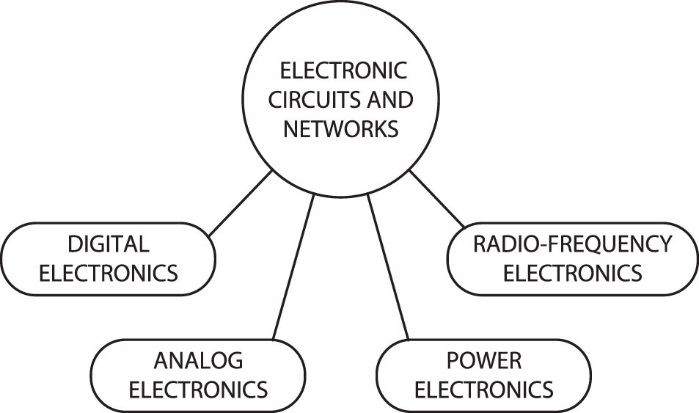
Figure 1 Advanced topics in electronics
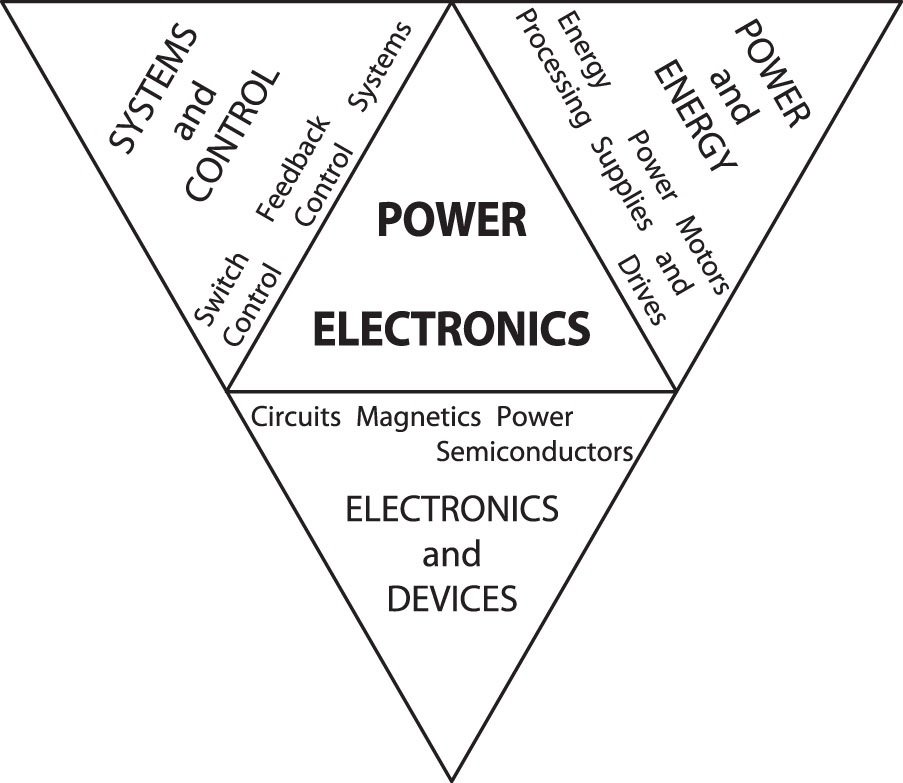
Figure 2 Control, energy, and power electronics are interrelated.
The breadth and variety of power electronics appeal to the generalist, and many engineers in the discipline explain that their interest is based on wide connections across electrical engineering topics. The challenges, however, are unique because power converters are large-signal nonlinear networks. The circuits and many of the devices do not lend themselves to familiar tools and approaches. This offers opportunities for new ways of thinking and for innovation. Here are some examples.
Example 1. An audio amplifier is an electronic circuit that often handles considerable energy levels. In North America, a typical stereo receiver draws 60 Hz ac energy, detects low-power FM electromagnetic signals, and delivers substantial power levels at audio frequency. Is this power electronics?
Maybe. However, many amplifier circuits do not handle high relative energy levels. Conventional class AB amplifiers are not considered examples of power electronics. A 100 W amplifier of this type is designed with transistors and heat sinks big enough to dissipate at least 100 W. The devices are used primarily to reconstruct audio information rather than to control and convert energy, and the efficiency is usually well below 50%.
Switching class D amplifiers are power electronic circuits, and these are used in portable communications products, automotive systems, telephone products, and many home theater systems. A class D circuit for 100 W audio output is designed for energy conversion. It might use transistors rated for only 20 W dissipation and can readily exceed 80% efficiency. The ratio of energy handled to energy consumed is 4:1 or higher.
Example 2. A half-wave rectifier circuit is built with a standard 1N4004 diode and a capacitor, as shown in Figure 3. This device is specified for peak reverse voltage of 400 V, average forward current of 1 A, and power dissipation of 1 W. The circuit input is 60 Hz, 120 V ac RMS, and the output is 170 V dc at up to 1 A. Is this a power electronic circuit?
Yes. The diode is rated for 1 W but is controlling up to 170 V and 1 A (yielding a product of 170 W) at the circuit output. The circuit controls 170 times as much energy as its devices consume. Rectifiers are typical examples of power electronic circuits.
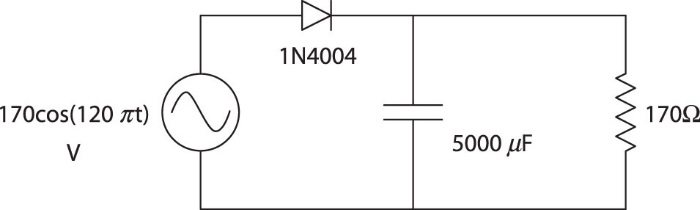
Figure 3 Half-wave rectifier for Example 2
Example 3. The FDP26N40 is a metal oxide–semiconductor field-effect transistor (MOSFET). Its manufacturer reports that it has a maximum continuous drain current rating of 26 A, maximum drain-source breakdown voltage of 400 V, and rated power dissipation of 265 W. In power electronic applications, this device can be used to control up to 26 A × 400 V = 10.4 kW. This transistor is rated to dissipate up to 265 W, yet it can control the flow in a 10 kW circuit. Several manufacturers have developed power electronic controllers for domestic refrigerators, air conditioners, and even electric vehicles based on this device and its relatives.
Power electronics designers look mainly at voltage and current ratings of a device. The power handling rating is an important factor in setting up design requirements and is much different (and higher) than the device power dissipation rating:
Definition: The power handling rating of a given device is the product of the voltage rating and the current rating.
The power handling rating sets up a target; there should be a way to use a device to manage energy flow at a level that approaches this value. One drawback of using devices close to their power handling ratings is that small problems can have large consequences. Many engineers find out the hard way that power semiconductors make fast, but expensive, fuses.
The Need for Electrical Conversion
In the earliest days of electricity grids in the 1880s and 1890s, there were public arguments back and forth between Edison, who advocated dc distribution, and Westinghouse and Tesla, who advocated ac distribution. Although many would claim that Tesla “won,” based on advantages that have led to domination of three-phase ac power systems, the outcome is more subtle to a power electronics engineer. Because of the early systems, there has always been a need for ac–dc and dc–ac conversion.
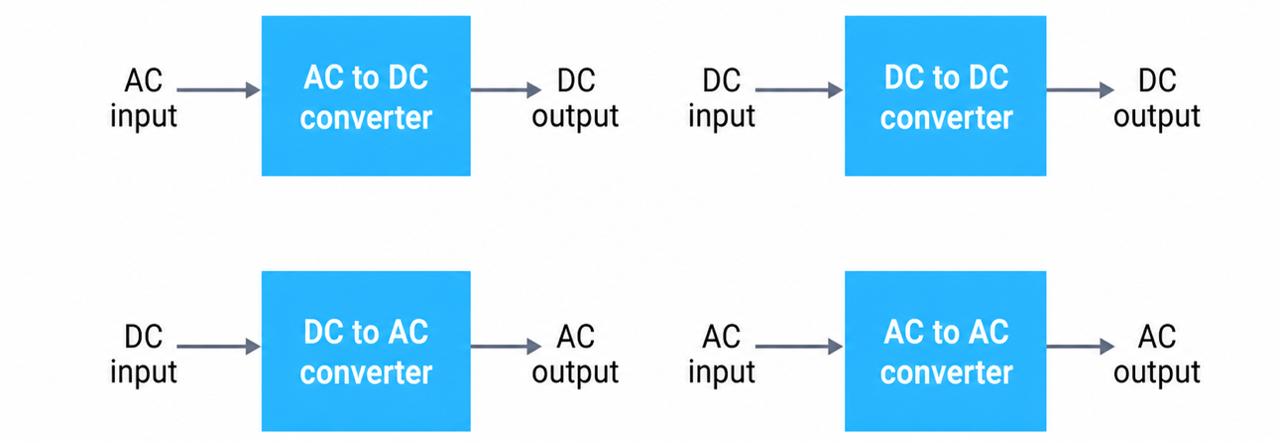
Figure 4. Types of Power Converters
It can be argued that the downfall of the original Edison system was the lack of good methods for dc–dc conversion. Today, technology has caught up. Even so, the Edison system did not really disappear.
In much of the world, there are actually two overlaid electricity grids. One, the familiar ac system using Tesla’s technologies, serves energy needs of industrial and residential customers. The other is a dc system that serves the needs of the telephone and communications infrastructure.
- Many modern applications are not a good match to either the Tesla or the Edison systems, and this makes power electronics ubiquitous. A desktop personal computer consumes power provided at about 1 V dc, 3 V dc, 5 V dc, 12 V dc, and three or four more levels, not the ±150 V dc provided in the Edison system.
- The motor in an electric car, industrial robot, manufacturing line, disk drive, or even a modern washing machine does not operate directly from a fixed-voltage, constant-frequency ac supply as envisioned by Tesla.
The ultimate result is that the best forms of electricity for generation, bulk transmission, distribution, and end use differ in many ways. The job of the power electronics engineer is to make it practical to exchange energy among all the different electrical forms—building bridges between what were once seen as mutually exclusive domains.
Table 1 suggests long-term ideal forms. Based on Tesla’s innovations, for instance, three-phase ac is probably the best form for electricity generation. It has been found that high-voltage dc (HVDC) is the best form for large-scale long-distance transmission.
Inside a school, factory, or home the situation is less clear: dc power offers better safety and higher efficiency, while ac power is easier to protect. It is a matter of present debate whether dc should return to wider use within homes and buildings.
|
Purpose |
Typical Form of Electricity |
Expected “Ideal Form” |
|
High-power generation |
Three-phase ac, 50–60 Hz, 10–30 kV |
Polyphase ac |
|
Bulk energy transport |
Three-phase ac, up to 765 kV or more |
dc, 500 kV and up |
|
Domestic wiring |
Split single-phase ac, 120 V (Americas), 230 V (Europe, Asia) |
Low-voltage dc |
|
Electric motors |
Single-phase ac, three-phase ac |
Polyphase ac, with frequency control |
|
Digital electronics |
+3.3 V dc and less |
Low-voltage dc (0.5 V and below are discussed) |
|
Analog electronics |
+12 V, ±12 V, lower levels |
Bipolar dc |
|
Fluorescent lighting |
Single-phase ac, approximately 230 V |
High-frequency ac |
|
Solid-state lighting |
Controlled dc current |
Controlled dc current |
|
Storage battery applications |
Load dependent |
Controlled dc current |
|
Medical and industrial magnetic devices |
Depends on available sources |
High-current dc |
|
Photovoltaic energy |
Fixed dc load or large inverter |
Matched to peak power transfer |
|
Mobile power systems |
+12 V dc (automotive), +28 V dc (aircraft), 400 Hz ac (aircraft, marine), variable-frequency ac (aircraft) |
dc at 300 V and higher levels |
|
Electric transportation |
700 V dc and other levels |
Medium-voltage dc |
|
Telephone and other communication systems |
48 V dc and other dc levels |
Low-voltage dc |
|
Underground power cable |
Polyphase ac |
Bipolar dc |
|
Portable equipment |
1.5 V to 20 V battery levels |
Highest possible efficiency, with multiple dc voltage levels for digital, analog, radio-frequency, and display electronics |
Table 1 Examples of Electrical Energy Forms
At the point of end use, the variety of needs is huge.
- Electronic appliances such as computers and flat-screen televisions require low-voltage dc power.
- Fluorescent lamps need high-frequency ac with controls that account for their nonlinear behavior, although many still operate directly from the grid if the voltage is suitable.
- Ovens and heating appliances are flexible but benefit from relatively high voltage.
- Motors in home appliances, heating ventilation, and air-conditioning systems, and robots often use power electronic inverters that operate in turn from dc.
This wide variety presents unending challenges to power electronics engineers. An expert might work one day on the complex power distribution inside a smart phone, the next on a multi-kilowatt battery charger and management unit for an electric vehicle, and the next on a generation interface for a wind turbine. The challenges range from microwatts to megawatts, and the needs range from electronic devices operating at hundreds of millivolts to utility grid devices at hundreds of kilovolts.
Key Takeaways
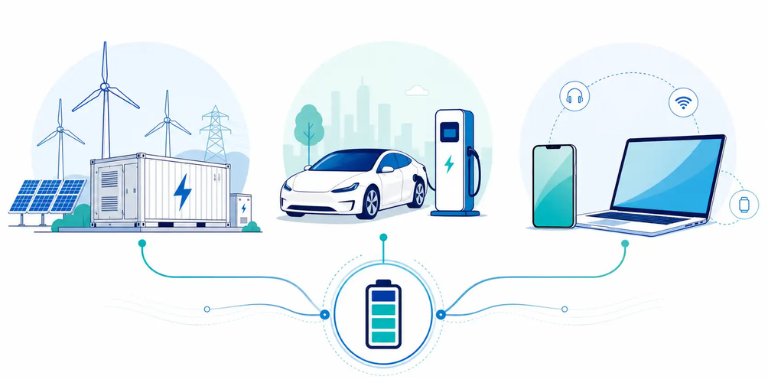
Power electronics serves as the critical link between electricity generation, transmission, storage, and end-use applications by enabling efficient conversion between different forms of electrical power.
Advances in semiconductor devices and converter technologies have made it possible to control energy flows ranging from tiny electronic systems to multi-megawatt industrial and utility-scale installations with high efficiency and precision.
As modern technologies increasingly rely on customized voltage levels, variable-speed motor drives, renewable energy systems, battery storage, and electrified transportation, power electronics has become one of the most important enabling technologies in electrical engineering. Its ability to improve efficiency, flexibility, and energy utilization ensures a central role in the ongoing evolution of smart grids, sustainable energy systems, and next-generation electrical infrastructure.