Understanding Lithium-Ion Battery Structure and Performance Characteristics
Learn about the structure, working mechanism, and key performance characteristics of lithium-ion batteries used in modern energy systems.
Lithium is the lightest metal in nature, with an atomic weight of 6.94, a density of 0.534 g cm−3, and a standard electrode potential of −3.045 V, which is the lowest potential among all the metal electrodes.
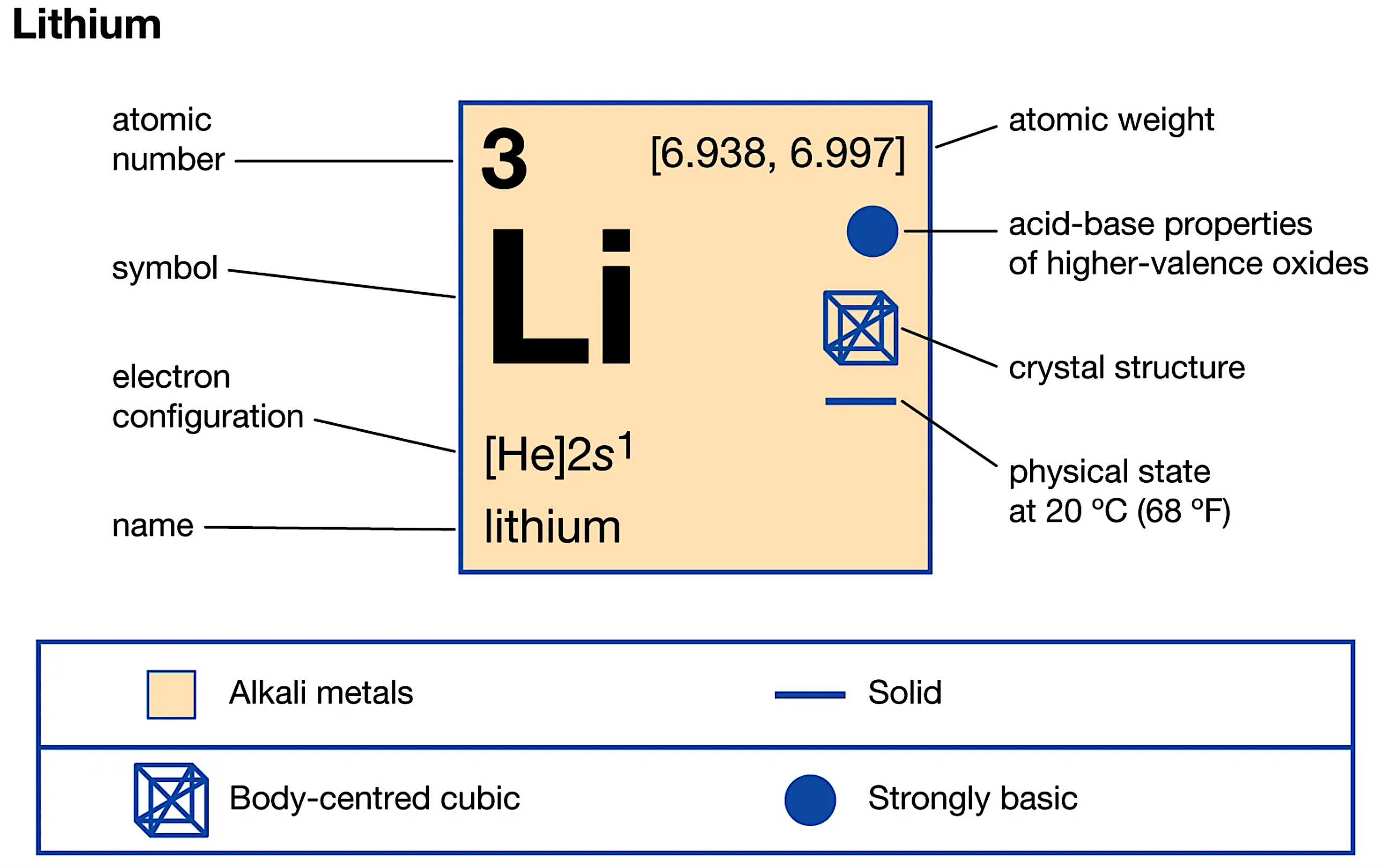
Figure 1. Lithium Metal Properties
In the 1970s, the first lithium metal battery was prepared by using titanium sulfide as the cathode and lithium metal as the anode. However, the lithium dendrites caused by the uneven deposition and distribution of lithium during charging will cause a large irreversible loss of active lithium, and even short-circuit of the battery, thus the battery is prohibited from charging.
In the 1980s, it is found that the lithium ions can be reversibly and freely embedded into the graphite materials, and soon, the battery was successfully prepared by using graphite as the anode material. Lithium ions can be freely and reversibly inserted and extracted between the cathode and anode, which is visually called “rocking chair battery” and later named “lithium-ion battery”.
Both of the lithium-ion batteries and lithium metal batteries can work by the insertion and extraction of lithium ions at the electrode. However, compared with the lithium metal battery, the lithium metal can be replaced by other active materials to solve the safety problem of lithium metal as the anode material in lithium-ion battery.
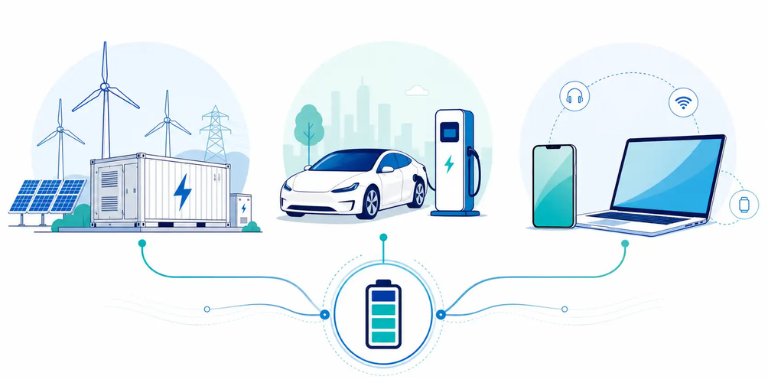
As the first company to commercialize lithium-ion batteries, Sony Corporation has done much research work. Currently, commercial lithium-ion batteries mainly use transition metal lithium salts as the positive electrode LixM2 (M represents a transition metal such as Co, Mn, Ni, Fe, etc.), and inexpensive and excellent conductive porous graphite as the negative electrode. They are widely used in digital products, grid energy storage, electric vehicles (EVs), hybrid electric vehicles (HEVs), and etc.
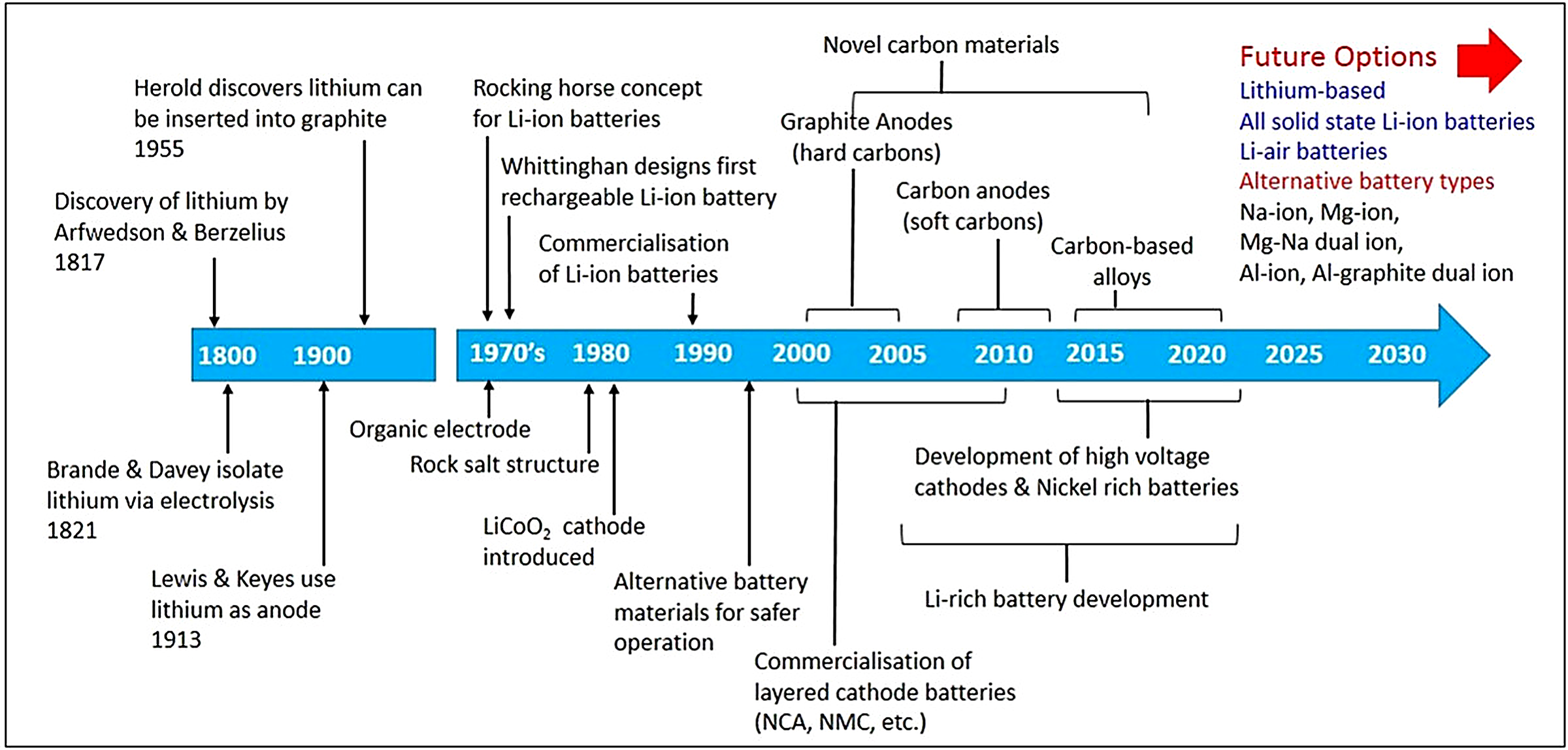
Figure 1. Lithium-Ion Battery History
Basic Structure of Lithium-Ion Battery
The composition of lithium-ion battery is shown in Figure 3. Lithium-ion battery is mainly composed of the following four parts:
- cathode
- anode
- electrolyte
- separator
The main purpose of cathode materials is to provide lithium ions for the whole battery system. At present, the main positive materials are Li2M (M = Co, Ni, Mn, and other transition metals) with layered structure, ternary materials (Li [Co, Ni, Mn]2), LiMn2O4, and LiMPO4 (M = Fe, Co, Ni, Mn, and so on) with spinel structure.
The main commercial cathode material of lithium-ion battery is LiCoO2. The cost of the material can account for about half of the total cost of lithium-ion battery. Its theoretical capacity is 274 mAh g−1, and the discharge voltage is 3.6 V.
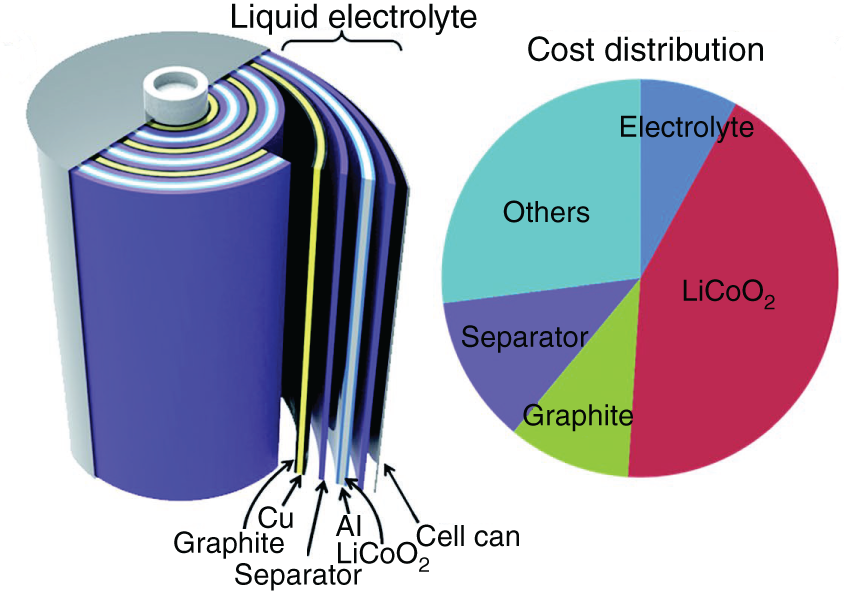
Figure 3. Structural illustration and relative cost of each component.
The anode is generally prepared by uniformly loading the active material together with the conductive agent (generally carbon black) and the binder on the current collector, and it is the key part of lithium-ion battery. Currently, the commonly used collector is copper foil with the thickness of 7–15 μm.
The electrolyte in lithium-ion batteries is an important medium for the free transportation of lithium ions between the cathode and anode. The electrolyte is generally composed of lithium salts (LiPF6, LiClO4, and LiBF4) and organic solvents. The common organic solvents are ethylene carbonate (EC), propylene carbonate (PC), dimethyl carbonate (DMC), and diethyl carbonate (DEC).
The function of the separator in the lithium-ion battery is to prevent the anode and cathode from contacting and thus avoiding the short circuit of the battery. The most commonly used membranes are polymer films, including polypropylene (PP) and polyethylene (PE). Generally, the strength of the separator is improved by three-layer structure, and the lithium ions can pass through the separator smoothly.
Working Mechanism of Lithium-Ion Battery
The working principle of lithium-ion battery is a simple process of lithium-ion continuously embedding and detaching between the cathode and anode. Its essence is a kind of concentration battery. Figure 4 shows the working principle of lithium-ion battery.
During charging process, the oxidation reaction of the cathode materials is taken place and the lithium ion transfers from the cathode to the anode. The lithium ion is embedded in the anode material after passing through the electrolyte and separator. At the same time, the electron reaches the anode through the external circuit.
During the discharge, the lithium ion is removed from the anode and transferred to the cathode and embedded in the cathode materials, accompanied by the electron transfer in the external circuit.
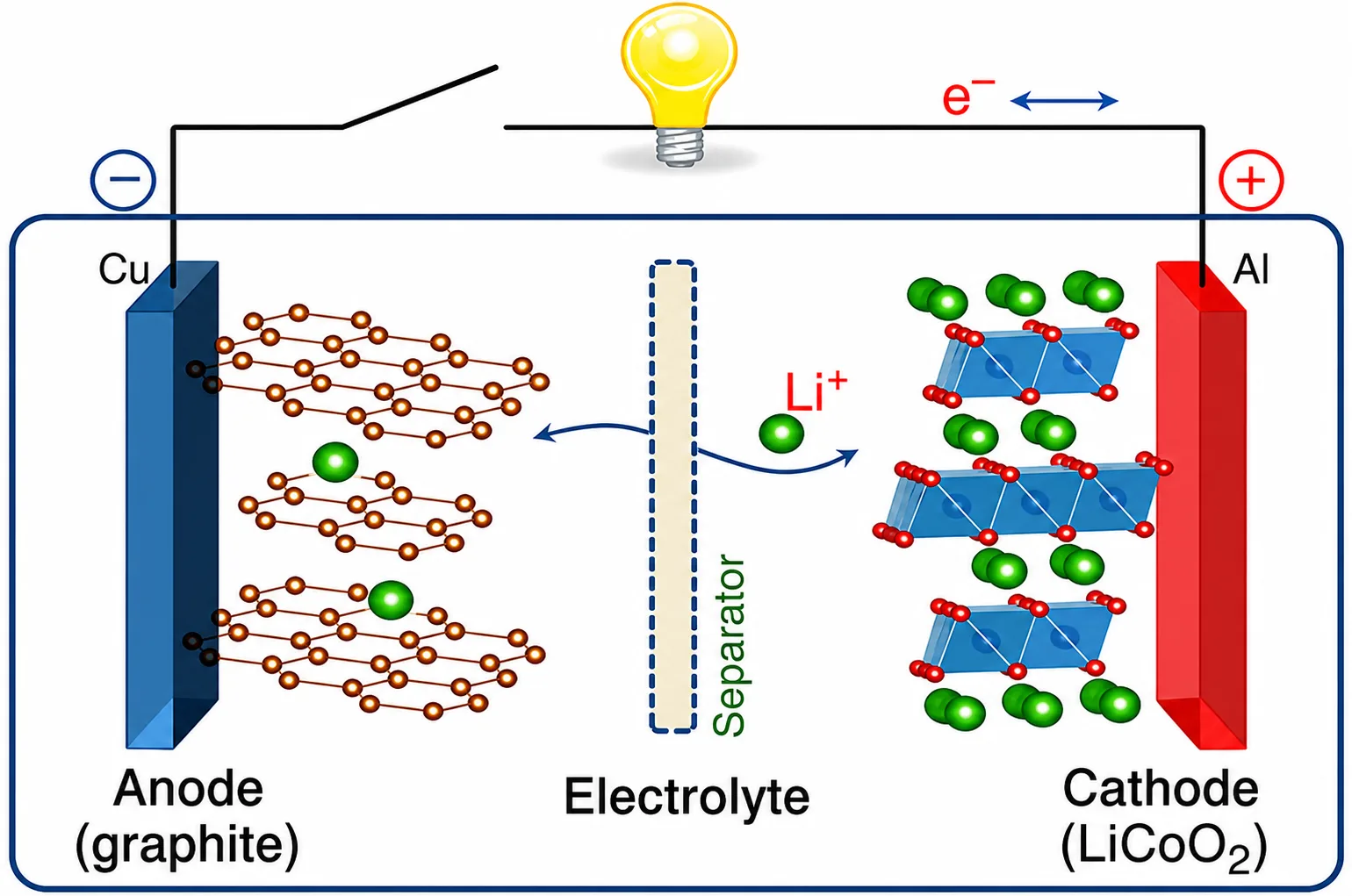
Figure 4. The working principle of lithium-ion battery.
Taking porous graphite as the anode materials, lithium cobaltate (LiCoO2) as the cathode materials, the electrochemical reactions during the charge and discharge process are briefly described as follows:
$$\begin{matrix}LiCo_{2} + 6C \rightleftharpoons Li_{1-x}Co_{2}+Li_{x}C_{6} & (1) \end{matrix}$$
$$\begin{matrix}Cathode:LiCo_{2} \rightleftharpoons xLi^{+}+e^{-}+Li_{1-x}Co_{2}+Li_{x}C_{6} & (2) \end{matrix}$$
$$\begin{matrix}Anode:xLi^{+}+e^{-}+6C \rightleftharpoons Li_{x}C_{6} & (3) \end{matrix}$$
Characteristics of Lithium-Ion Batteries
The advantages of lithium-ion batteries are mainly as follows:
- Capacity and Energy Density. Compared with normal chemical batteries, the lithium-ion battery has a large specific capacity and energy density. The volume of the lithium-ion battery is 20–50% of that of a chemical battery with the same capacity. At this stage, the actual specific energy of the lithium-ion battery is 150–200 Wh kg−1, and the specific energy of the lithium-ion battery can eventually reach 250–300 Wh kg−1.
- Working Range. Lithium-ion battery allows a wide working range. Under room temperature, the discharge capacity of the battery accounts for more than 85% of the overall theoretical capacity after one month in an open circuit. Lithium-ion batteries can be discharged steadily in a wide temperature range (−20 to 55 °C).
- Recycling. Lithium-ion battery can be recycled and used many times. The lithium-ion batteries currently used have avoided the problems of internal lithium dendrite short circuits that cause damage and potential safety hazards. The remaining capacity of the lithium-ion battery with carbon material as the anode is still more than 60% of the theoretical capacity after 1200 cycles, which is much higher than that of other types of batteries.
- Resistance Characteristics. Compared with lithium metal battery, lithium-ion battery possesses the resistance characteristics of short circuit, overcharge, overdischarge, and impact. It can be quickly charged and discharged at a current density of 1 C.
- Memory Effect. No memory effect exists in lithium-ion battery, and it can be repeatedly charged and discharged.
- Packaging. Lithium-ion battery can be packed with small size and lightweight.
The shortcomings of lithium-ion batteries are mainly manifested as follows:
- Conductivity. Since the electrolyte of lithium-ion battery mainly consists of organic component, the conductivity is lower than that of a chemical battery on the market, so the corresponding internal circuit impedance is greater than that of a chemical battery.
- Voltage Platform. The voltage platform of the lithium-ion battery changes greatly (about 40%) during the discharge process, and there is no relatively more stable discharge platform. For a device that requires stable power supply, it is impossible to maximize its efficiency, and also due to the large change in the voltage platform of the lithium-ion battery, it is also difficult to estimate the remaining capacity.
- Cost. The cost of battery composition materials is high. The main cost of lithium-ion batteries comes from the relatively expensive cathode material LiCo2O4.
- Battery Management. A comprehensive battery management system is needed to prevent the lithium-ion battery from overcharging.
Key Takeaways
Lithium-ion batteries operate based on the reversible movement of lithium ions between the cathode and anode, enabling efficient energy storage and release through electrochemical reactions. Their structure consists of four main components—cathode, anode, electrolyte, and separator—each playing a critical role in performance, safety, and cost. Compared to lithium metal batteries, lithium-ion technology offers improved safety and cycle life while maintaining high energy density and efficiency. Despite advantages such as wide operating range, fast charging, and no memory effect, challenges remain including higher cost, variable voltage profiles, and the need for robust battery management systems.