Direct Current Fundamentals
Electricity Production and Use
-
Question 1
Name five methods (energy conversions) to generate electricity. Give an example of each.Reveal answerElectrical energy can be directly obtained from:
- Chemical energy, by use of batteries;
- Light energy, employing photovoltaic cells;
- Heat energy, by means of thermocouples;
- Mechanical energy, exerting pressure on crystals;
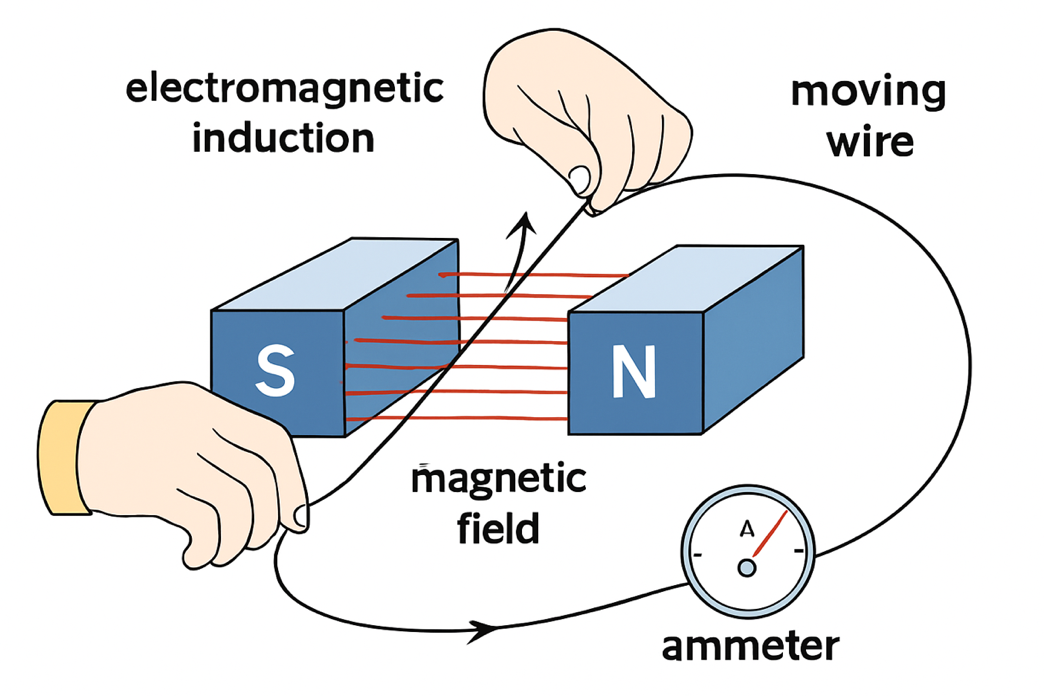
- Magnetic energy, inducing electrical currents in wires.
-
Question 2
What is meant by the term electromagnetic induction?Reveal answerThe term Electromagnetic Induction refers to the principle of generating electric current by moving a wire within a magnetic field.
-
Question 3
Explain the difference between the words photovoltaic and photoconductive.Reveal answerPhotovoltaic devices generate an emf when struck by light.
Photoconductive devices alter their internal resistance when the light intensity is varied.
-
Question 4
Name at least two applications for:
- Thermocouples.
- Piezoelectricity.
- Electrolysis.
- Electromagnetism
Reveal answer- Thermocouples find application as safety devices, sensing the presence of a pilot flame in gas-fired appliances. Thermocouples can also be used as heat sensing and temperature measuring devices.
- The piezoelectric effect finds application with the use of crystal cartridges in the pick- up arms of record players, or with crystal microphones.
- Electrolysis takes place whenever batteries are charged or discharged. Another example of electrolysis is found in the process of electroplating base metals.
- Electromagnetism is employed to drive all electrical motors. In communication electronics it is used to operate loudspeakers, or to store informational signals on tape.
-
Question 5
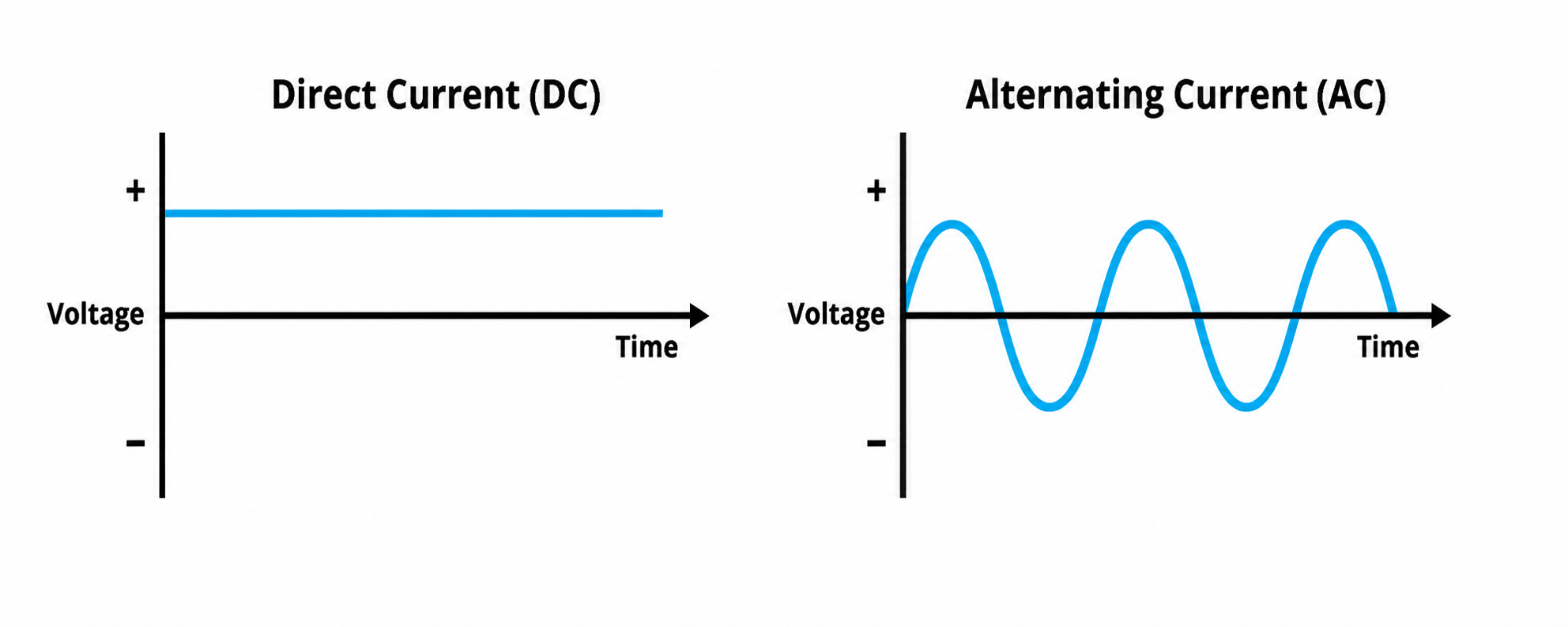
What is the difference between AC and DC electricity?Reveal answerAlternating current (AC) periodically reverses direction, typically in a sinusoidal waveform, which makes it suitable for efficient long-distance transmission. Direct current (DC) flows in a single direction and is commonly used in batteries, electronics, and low-voltage applications.
-
Question 6
What is the role of a generator in electricity production?Reveal answerA generator converts mechanical energy into electrical energy through electromagnetic induction. This is achieved by rotating a conductor within a magnetic field, which induces a voltage and produces current.
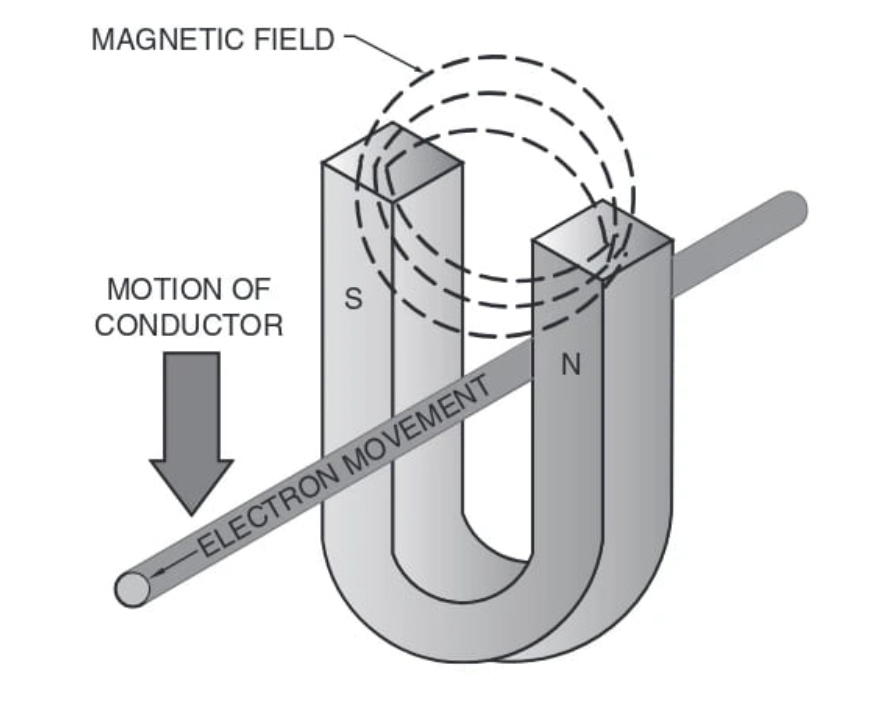
A conductor cutting magnetic lines of force causes a movement of electrons
-
Question 7
What is meant by electrical power?Reveal answerElectrical power is the rate at which electrical energy is transferred or converted into another form, such as heat, light, or mechanical work. It is measured in watts and depends on both voltage and current in a circuit.
$$P=VI=Volt-Ampere=Watts$$ -
Question 8
What are renewable sources of electricity? Give examples.Reveal answerRenewable energy sources are naturally replenished and can be used continuously without depletion. Examples include solar panels converting sunlight into electricity, wind turbines generating power from wind, and hydroelectric systems using flowing water.
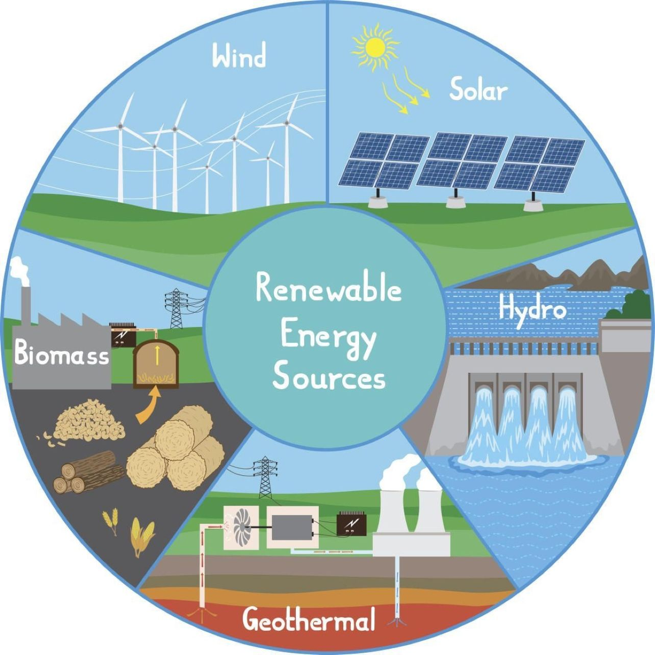
Renewable Energy Sources
-
Question 9
What is the function of a transformer in power systems?Reveal answerA transformer is used to step up or step-down voltage levels in AC systems, enabling efficient transmission and safe utilization. By increasing voltage for transmission, it reduces current and minimizes power losses in transmission lines.
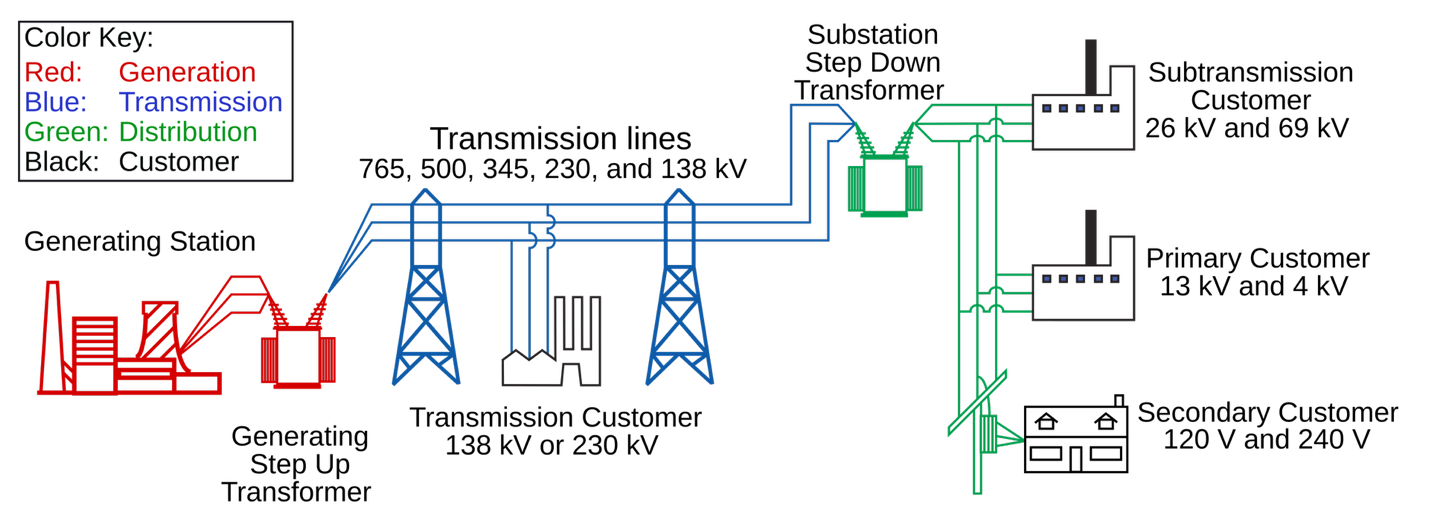
-
Question 10
What is energy efficiency in electrical systems?
Reveal answerEnergy efficiency refers to how effectively electrical energy is converted into useful output while minimizing losses. Higher efficiency means less wasted energy, improved performance, and reduced operational costs in electrical systems.
