Automotive Mechanics
Workshop Safety
-
Question 1
Identify five important items of personal protective equipment.Reveal answerPersonal protective equipment (PPE) includes protective clothing, safety footwear, safety glasses or face shields, welding shields, and gloves. These items help protect workers from injuries caused by heat, sparks, sharp objects, chemicals, and moving machinery.
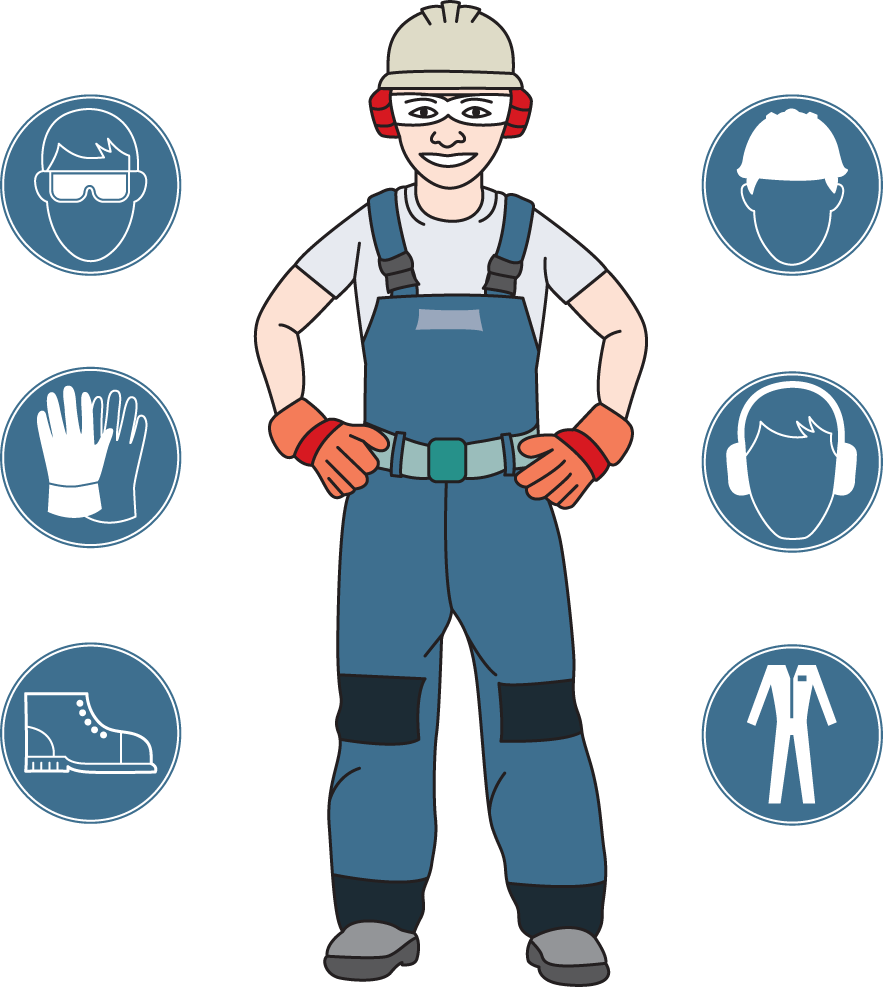
PPE is a vital element of workshop clothing
-
Question 2
How can you help to ensure the safety of other people?Reveal answerYou can help ensure the safety of others by understanding and following general workshop safety procedures and using machines correctly. Safe behavior, awareness, and reporting hazards also help prevent accidents in the workplace.
-
Question 3
What precautions should be taken when using compressed air?Reveal answerCompressed air should never be pointed at yourself or other people because high-pressure air can cause serious injuries. Air hoses and guns should also be used carefully and checked regularly for damage or leaks.
-
Question 4
List some precautions that are needed in relation to workshop machines.Reveal answerAlways read and follow operating instructions before using a machine, keep machines properly serviced, and keep hands and loose clothing away from moving parts. Correct use of guards and safety devices is also important.
-
Question 5
Before using a machine, what general check should be carried out?Reveal answerCheck that all guards are correctly fitted and that tool rests or supports are properly adjusted. Also ensure the machine is clean, stable, and safe to operate.
-
Question 6
What safety precautions relate to portable electric tools?Reveal answerPortable electric tools should be kept in good working condition and used according to instructions. Power cables, plugs, and switches should always be checked for wear or damage before use.
-
Question 7
What precautions should be taken when parking a vehicle?Reveal answerWhen parking a vehicle, apply the handbrake firmly and place the transmission in reverse gear or “Park” for automatic vehicles. This helps prevent the vehicle from rolling unexpectedly.
-
Question 8
When working on an engine, how could the bodywork be protected?Reveal answerProtective guards or covers should be placed over mudguards, seats, and nearby body panels. This helps prevent scratches, dents, oil stains, and other damage during repair work.
-
Question 9
Why are the jacking points of a vehicle important?Reveal answerCorrect jacking points are designed to safely support the vehicle’s weight. Using the wrong point can damage the body or chassis and may cause the vehicle to slip, leading to injury.
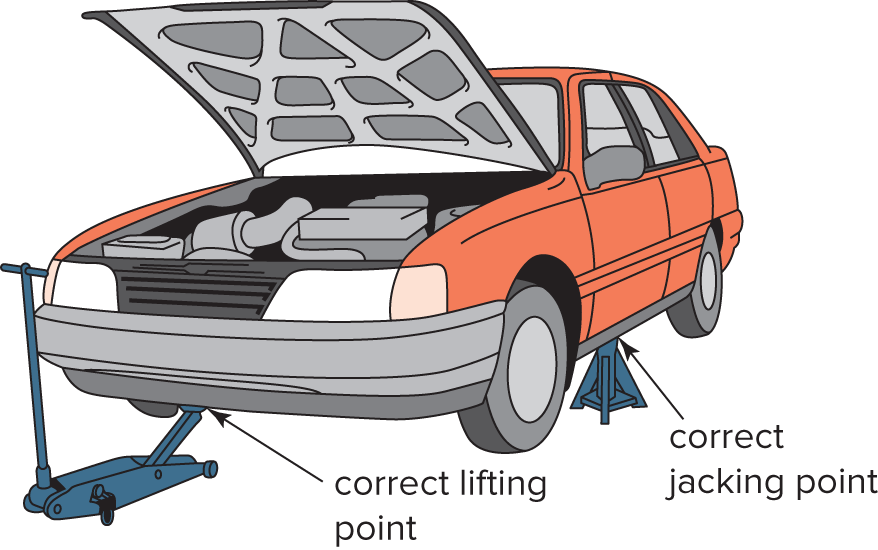
Jack a vehicle safely and place lifting stands in the right places
-
Question 10
Why should special care be taken when working with batteries?Reveal answerBatteries contain corrosive acid that can cause burns and can also release explosive gases. Sparks, flames, or incorrect handling may lead to explosions or serious injury.
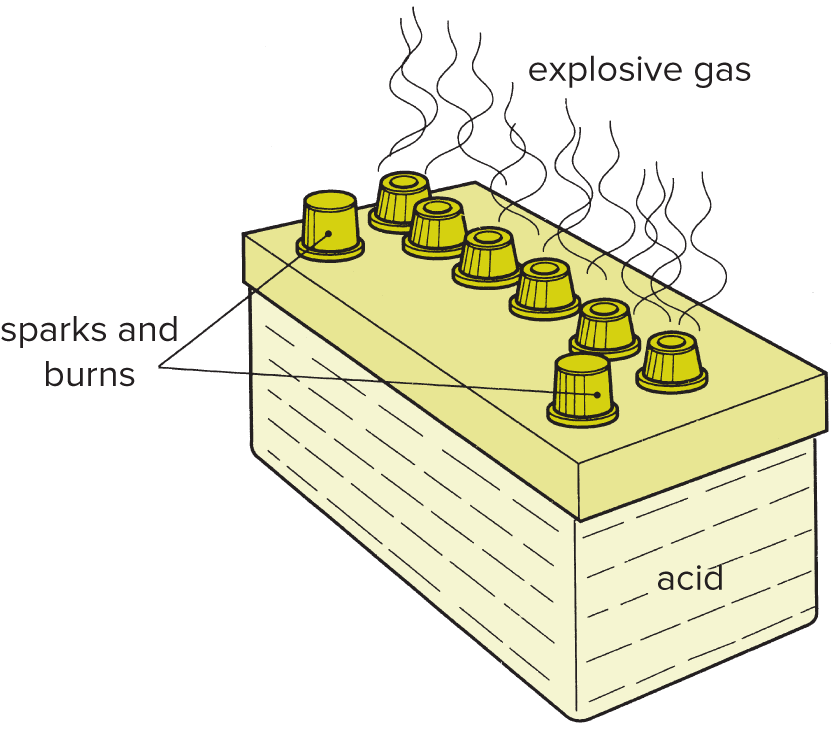
Possible hazards when working with batteries
-
Question 11
Why is it necessary to take care with airbags?Reveal answerIf airbags deploy, they may cause serious injury if the person is not sitting in the normal driver or passenger position – and they will deploy if crash sensors are disturbed or voltage is applied to the wiring.
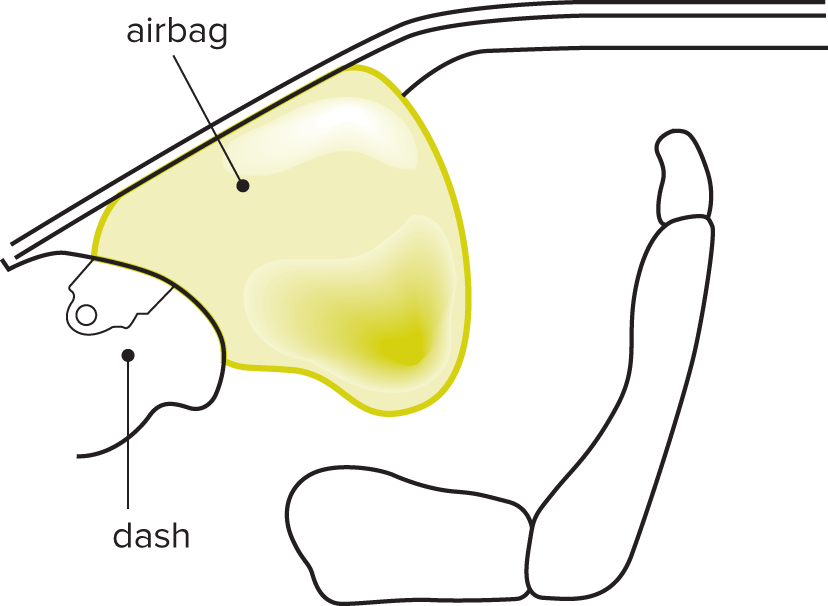
An airbag that has been deployed
-
Question 12
Name some of the hazards associated with a running engine.Reveal answerExhaust gas, engine moving parts such as fans, belts and pulleys, hot engine coolant, hot exhaust manifolds, electrical shocks from the high-voltage ignition system, risk of fire from petrol and LPG leaks.
-
Question 13
What is a flammable liquid and how should it be stored?Reveal answerA flammable liquid is a liquid that can easily catch fire from heat, sparks, or open flames. Such liquids should be clearly labeled and stored in approved flammable-liquid storage cabinets.
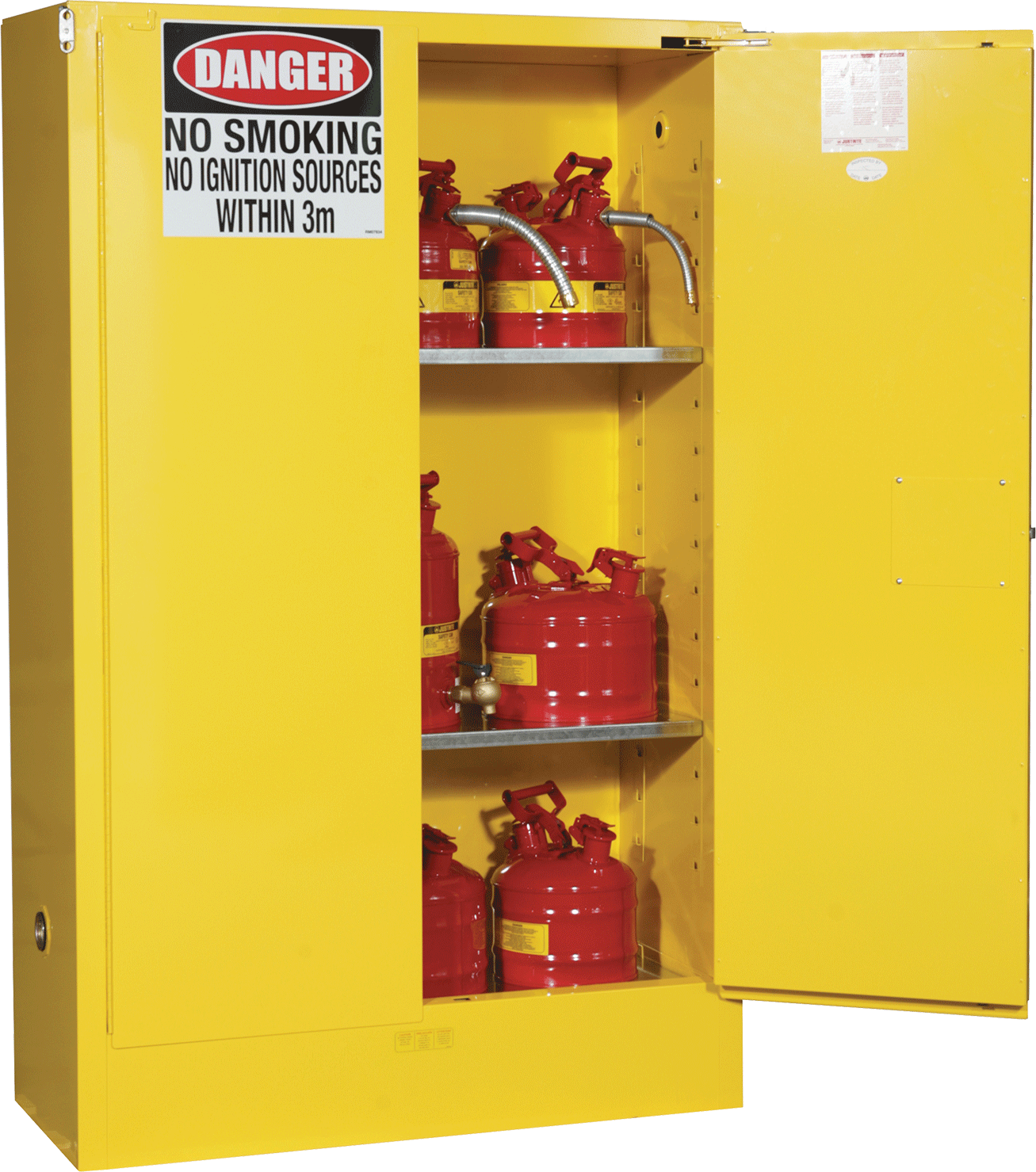
Flammable liquids storage cabinet
-
Question 14
Name four items of important information that can be found on a safety data sheet.Reveal answerInformation on an SDS includes:
- manufacturer’s details and product name,
- dangerous goods classification,
- physical properties,
- hazard information,
- precautions for use and safe-handling,
- storage and
- emergency information.
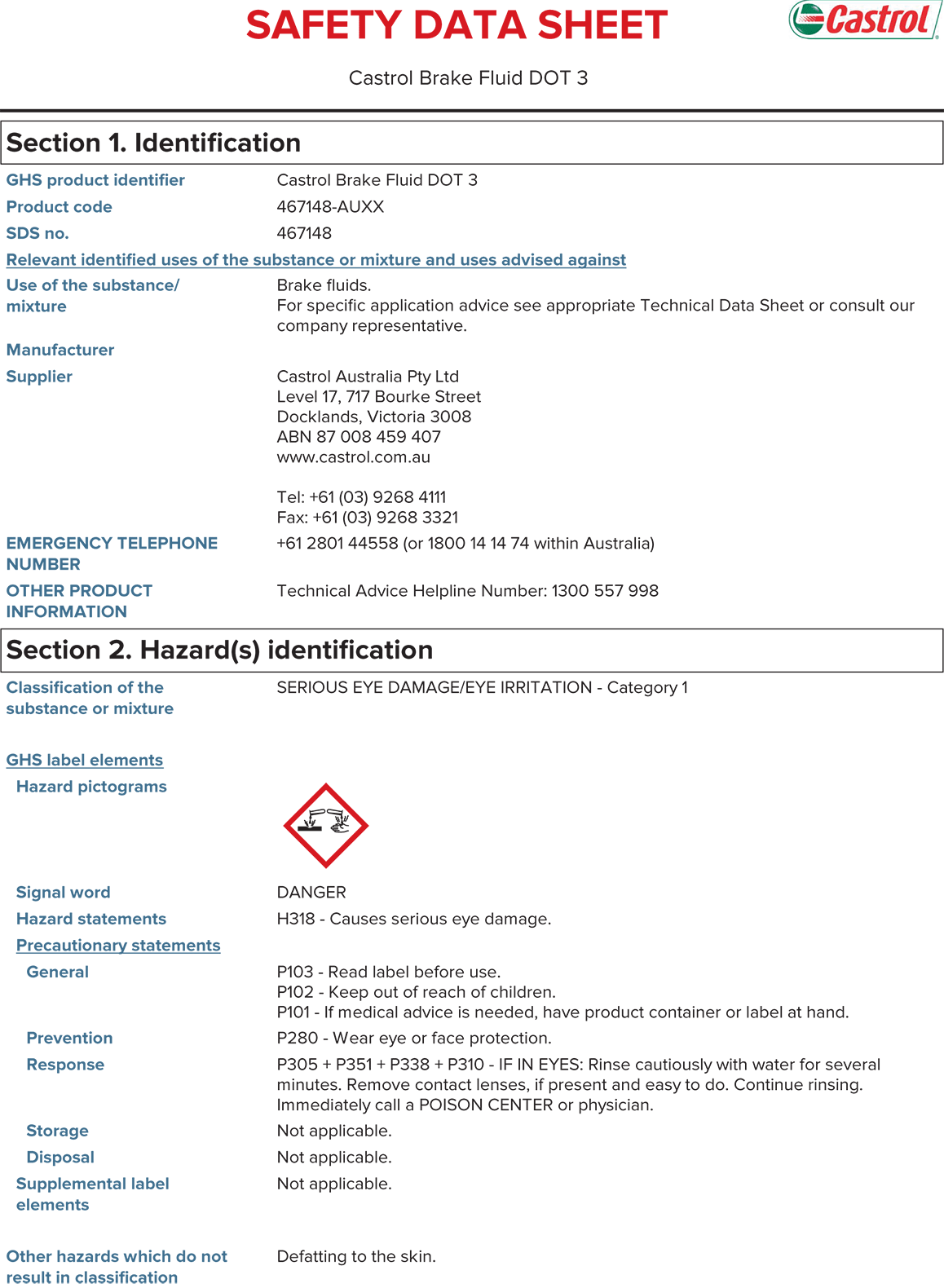
Safety data sheet CASTROL
-
Question 15
What is spontaneous combustion?Reveal answerSpontaneous combustion is a fire that starts naturally through chemical reactions between certain materials without an external flame or spark. Oily rags and some chemicals can create this risk if stored improperly.
-
Question 16
What are combustible materials?Reveal answerCombustible materials are substances that can burn when heated or vaporized. Examples include wood, paper, cloth, fuel, and some chemicals commonly found in workshops.
-
Question 17
How does air affect a fire?Reveal answerAir contains oxygen, which supports combustion and allows fire to continue burning. Reducing the oxygen supply can help control or extinguish a fire.
-
Question 18
What is meant by the classes of fires?Reveal answerFires are classed as A, B, C, D, E as follows:
1 – Class A: Fires with solid materials, such as paper, wood, cloth.
2 – Class B: Fires with flammable liquids, such as petrol, kerosene, methylated spirits and paints
3 – Class C: Fires with flammable gases, such as LPG and NGV
4 – Class D: Burning metals, such as magnesium, sodium, lithium
5 – Class E: Live electrical equipment fires, such as in switchboards, electric equipment, motors, switches, appliances
-
Question 19
What type of extinguisher should be used on an electrical fire?Reveal answerDry powder or CO2 (carbon dioxide) extinguishers should be used on electrical fires. These extinguishers do not conduct electricity and are safer for energized electrical equipment.
-
Question 20
When would a foam-type extinguisher be used?Reveal answerFoam extinguishers are used for class A and B fires. They must not be used on electrical fires. They are red with a blue band and eject foam, which can be used on petrol and similar liquid fires.
The foam blankets the liquid, cutting off the air supply. If the fire is in a container of liquid, the foam should be directed to the side of the container so that it spreads across the surface of the liquid.
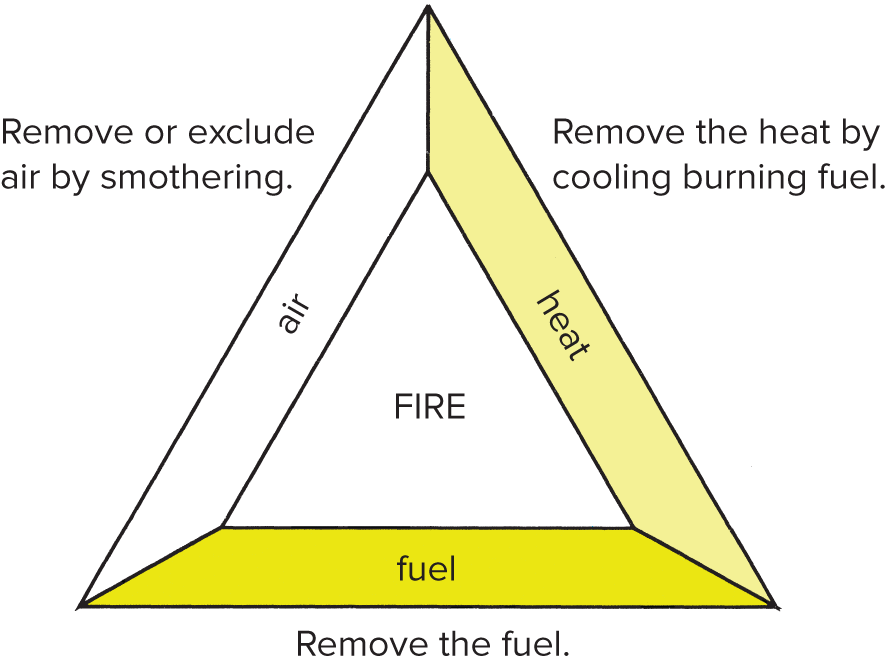
The triangle represents the three elements of a fire—air, fuel and heat. Remove one side of the triangle and it will collapse, just as removing one element of the fire will extinguish it
-
Question 21
What is first aid?Reveal answerFirst aid means rendering immediate assistance in the event of an accident or sudden sickness. The most important actions are those which save life; for example, resuscitation, stoppage of severe bleeding and treatment of poisoning.
All workshops should have at least one person who is fully trained in first aid and who knows what to do in an emergency. If an accident occurs in a workshop, or there is a case of sudden illness, a person with first-aid training will know how to handle the situation.
