Automotive Mechanics
Motor Vehicle Components
-
Question 1
Name the main sections of a motor vehicle.Reveal answerA motor vehicle consists of a number of sections that can be considered as follows:
- Engine assembly. The source of power.
- Frame or chassis. The basic structure to support the engine and mechanical components.
- Drive train. Gears and shafts to connect the engine to the driving wheels.
- Running gear. The wheels, tyres, suspension, steering and brakes, for the vehicle to operate on the road.
- Electrical system. The battery, wiring, lights, starter, alternator, electronic controls and other electrical components.
- Body of the vehicle. Provides seating for the driver and passengers, and in commercial vehicles carries loads.
-
Question 2
Why is the engine referred to as an internal-combustion engine?Reveal answerThe engine is called an internal-combustion engine because the fuel-air mixture burns inside the engine cylinders. The combustion process creates high-pressure gases that push the pistons and produce mechanical power to move the vehicle.
-
Question 3
What types of fuel are used in automotive engines?Reveal answerAutomotive engines commonly use fuels such as petrol (gasoline), diesel/distillate, and gas fuels like CNG or LPG. Different engines are designed to operate efficiently with specific fuel types depending on performance, efficiency, and emission requirements.
-
Question 4
What is the purpose of shock absorbers?Reveal answerShock absorbers are used to dampen and control the oscillation of the vehicle springs. They help reduce excessive bouncing, improve ride comfort, maintain tyre contact with the road, and increase vehicle stability during driving.
-
Question 5
Why are tyres necessary?Reveal answerTyres are necessary because they support the vehicle’s weight, absorb minor road shocks, and provide traction between the vehicle and the road surface. They also assist in steering, braking, and maintaining overall vehicle stability and control.
-
Question 6
What are the parts of the power train?Reveal answerIn a rear-wheel-drive vehicle, the power train includes the clutch, transmission, propeller shaft, differential, and rear axle. In a front-wheel-drive vehicle, the power train usually consists of the clutch, transaxle, and drive shafts. These components work together to transfer engine power to the driving wheels.
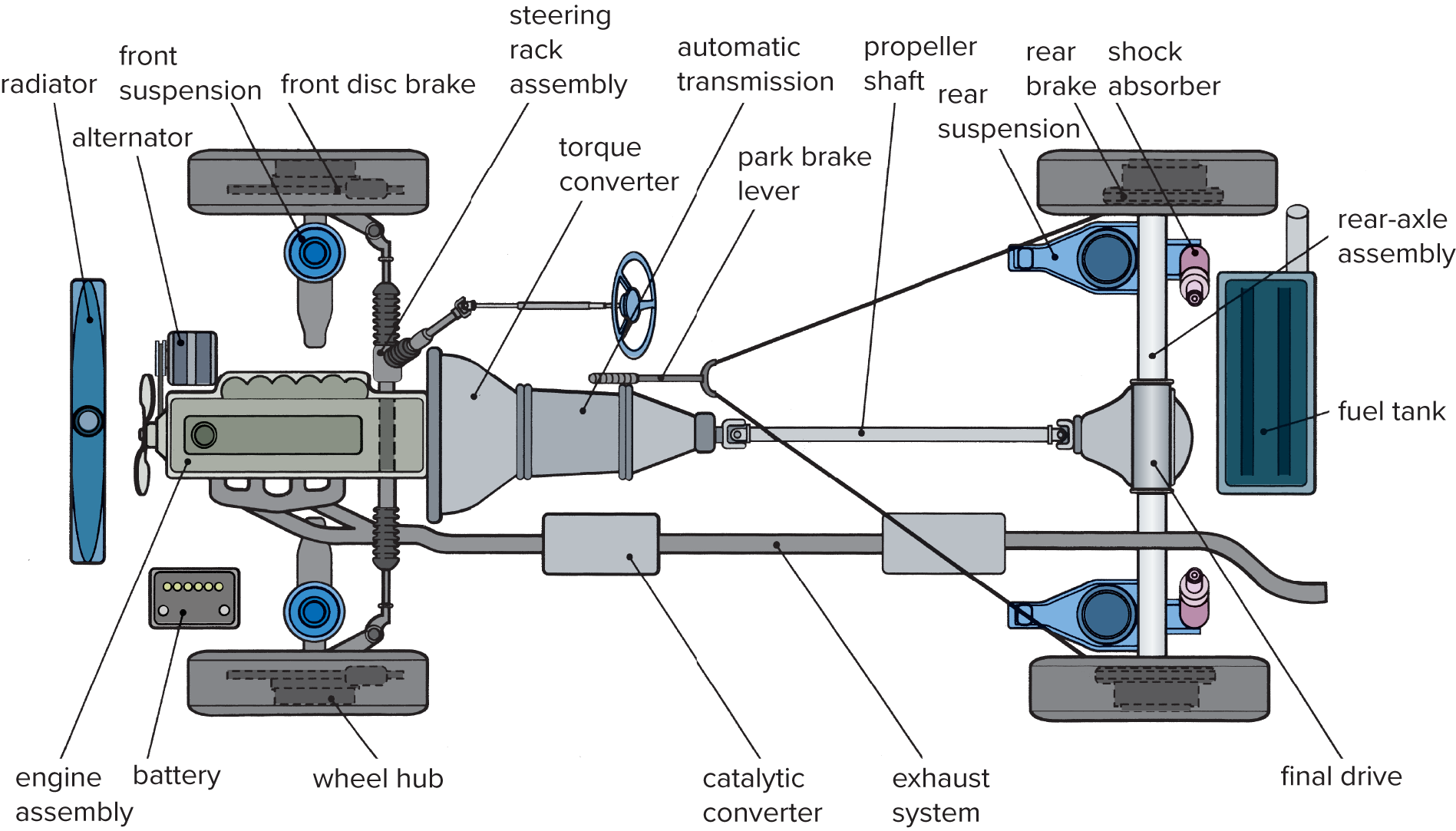
Skeletal arrangement of a rear-wheel-drive vehicle
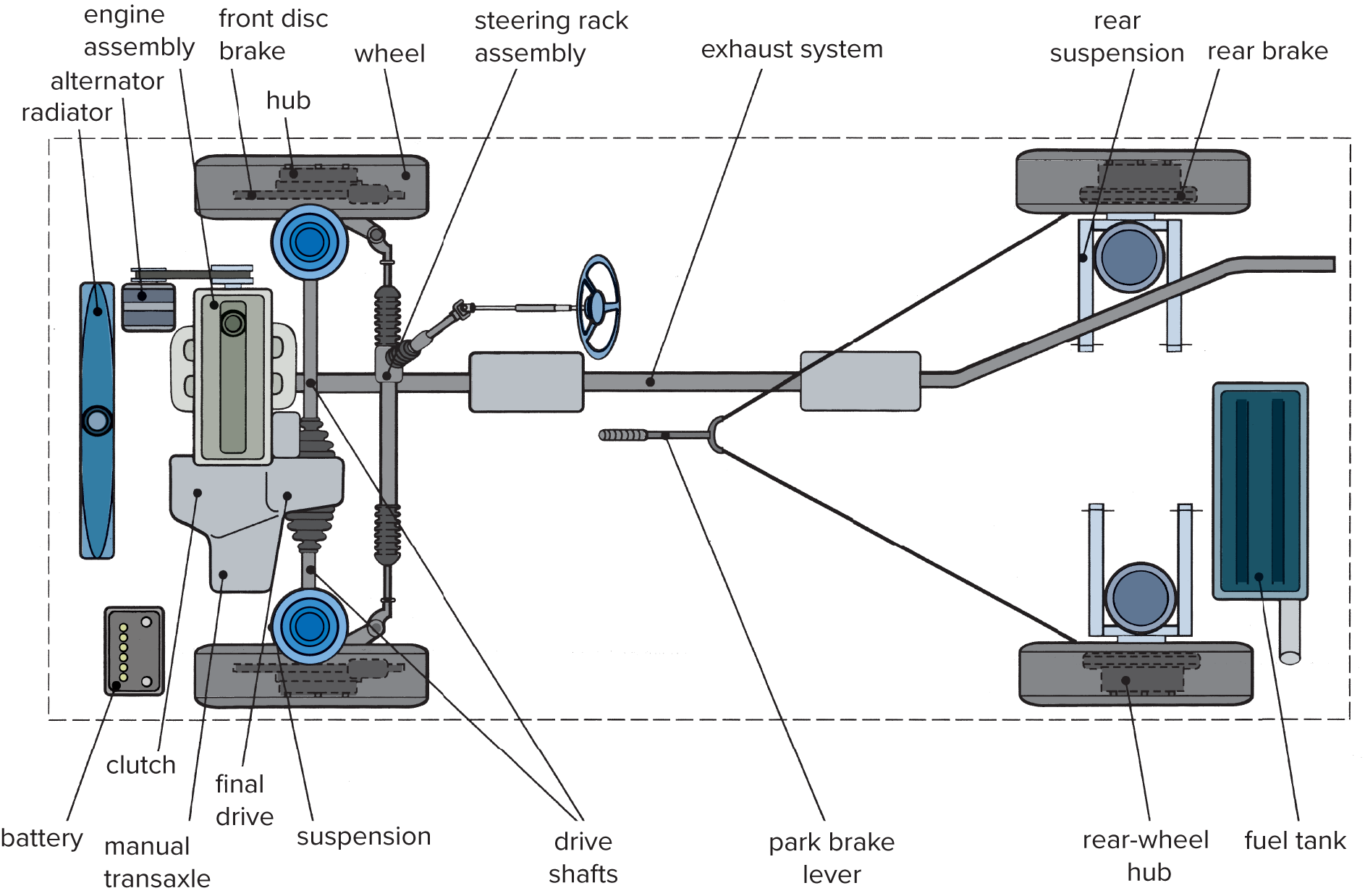
Skeletal arrangement of a front-wheel-drive vehicle
-
Question 7
Why is a clutch necessary?Reveal answerA clutch is necessary to connect and disconnect the engine from the transmission. It allows smooth starting from rest by gradually applying engine power to the drivetrain and also enables gear changes without damaging transmission components.
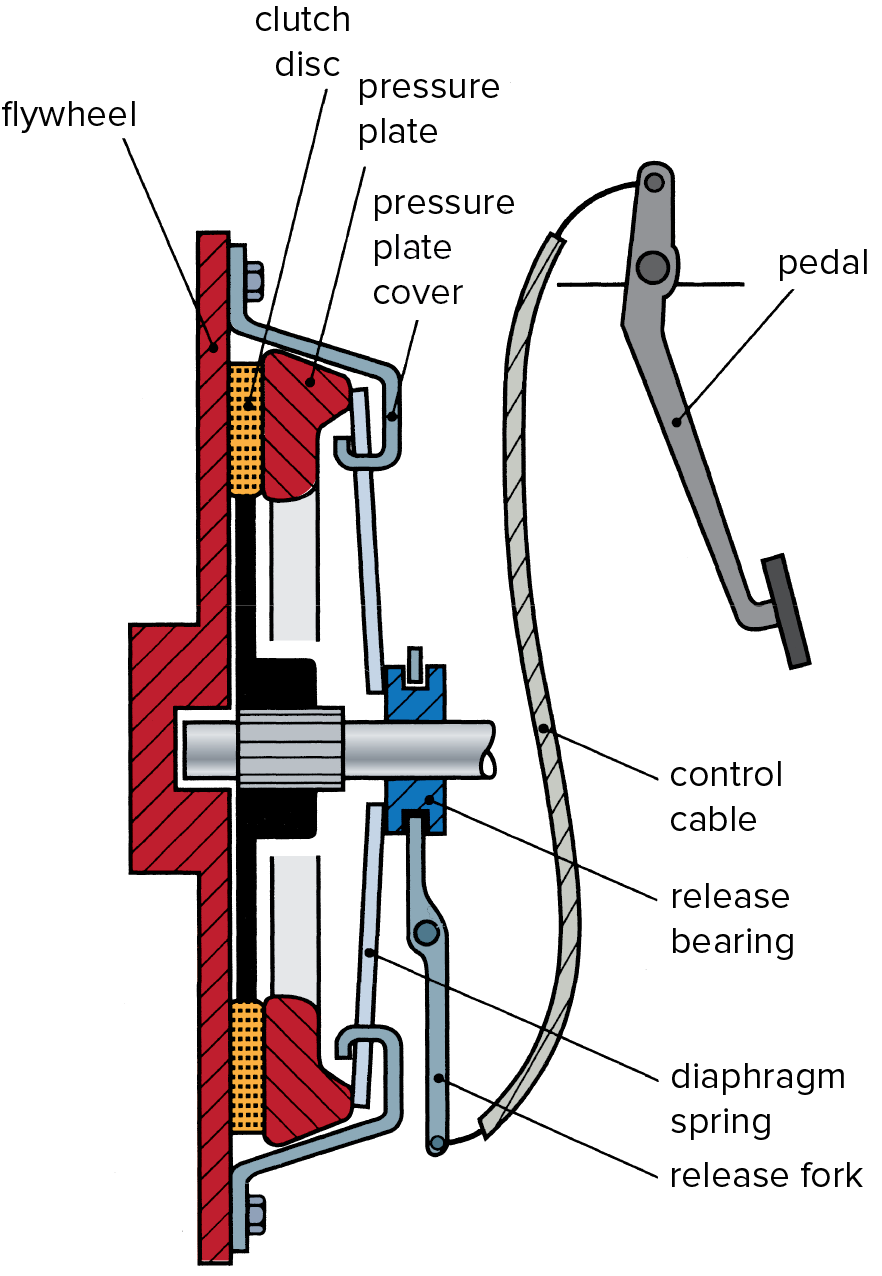
Simplified illustration of a clutch assembly
-
Question 8
Why is a transmission fitted to a vehicle?Reveal answerA transmission is fitted because internal combustion engines produce limited torque at low speeds and operate efficiently only within a certain speed range. The transmission provides different gear ratios to increase torque for starting and climbing while allowing higher speeds during normal driving.
-
Question 9
What is a transaxle?Reveal answerA transaxle is a combined transmission and axle assembly commonly used in front-wheel-drive vehicles. It combines the functions of the gearbox, differential, and final drive into a single compact unit.
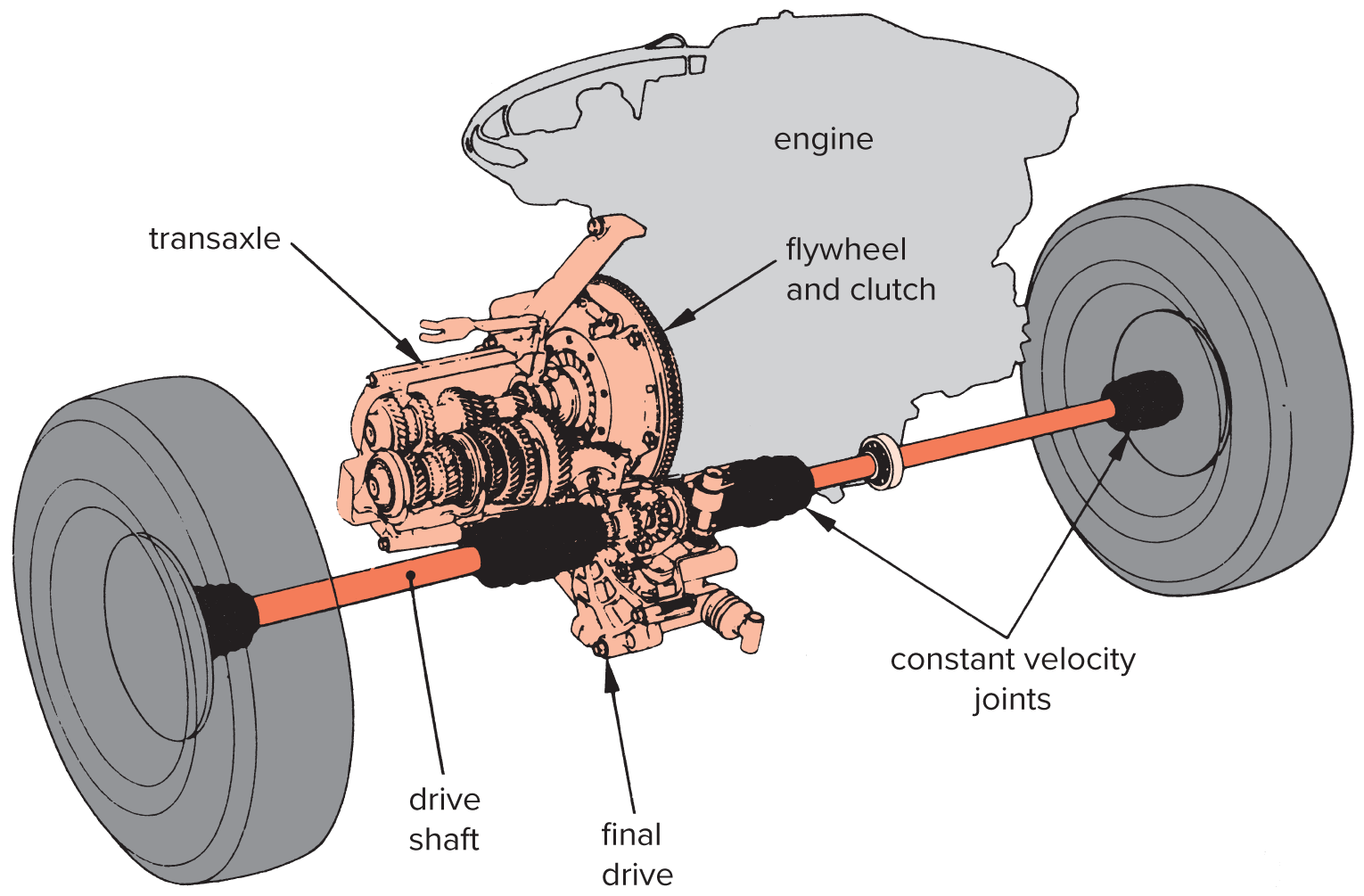
Arrangement of a transaxle and front-wheel drive
-
Question 10
What is the function of the universal joints?Reveal answerUniversal joints allow the drive shaft to transmit power while bending or changing angle. They compensate for movement between drivetrain components caused by suspension travel and uneven road conditions.
-
Question 11
What does the differential do?Reveal answerThe differential allows the driving wheels to rotate at different speeds when the vehicle turns. This is important because the outer wheel travels a greater distance than the inner wheel during cornering.
-
Question 12
What are the two designs of brakes?Reveal answerThe two main brake designs are disc brakes and drum brakes. Disc brakes use a rotating disc and brake pads for stopping power, while drum brakes use brake shoes pressing against the inside of a rotating drum.
-
Question 13
What is the purpose of the suspension?Reveal answerThe suspension supports the vehicle body and allows the wheels to move up and down over uneven road surfaces without transferring excessive movement to the passengers. It improves ride comfort, handling, and vehicle stability.
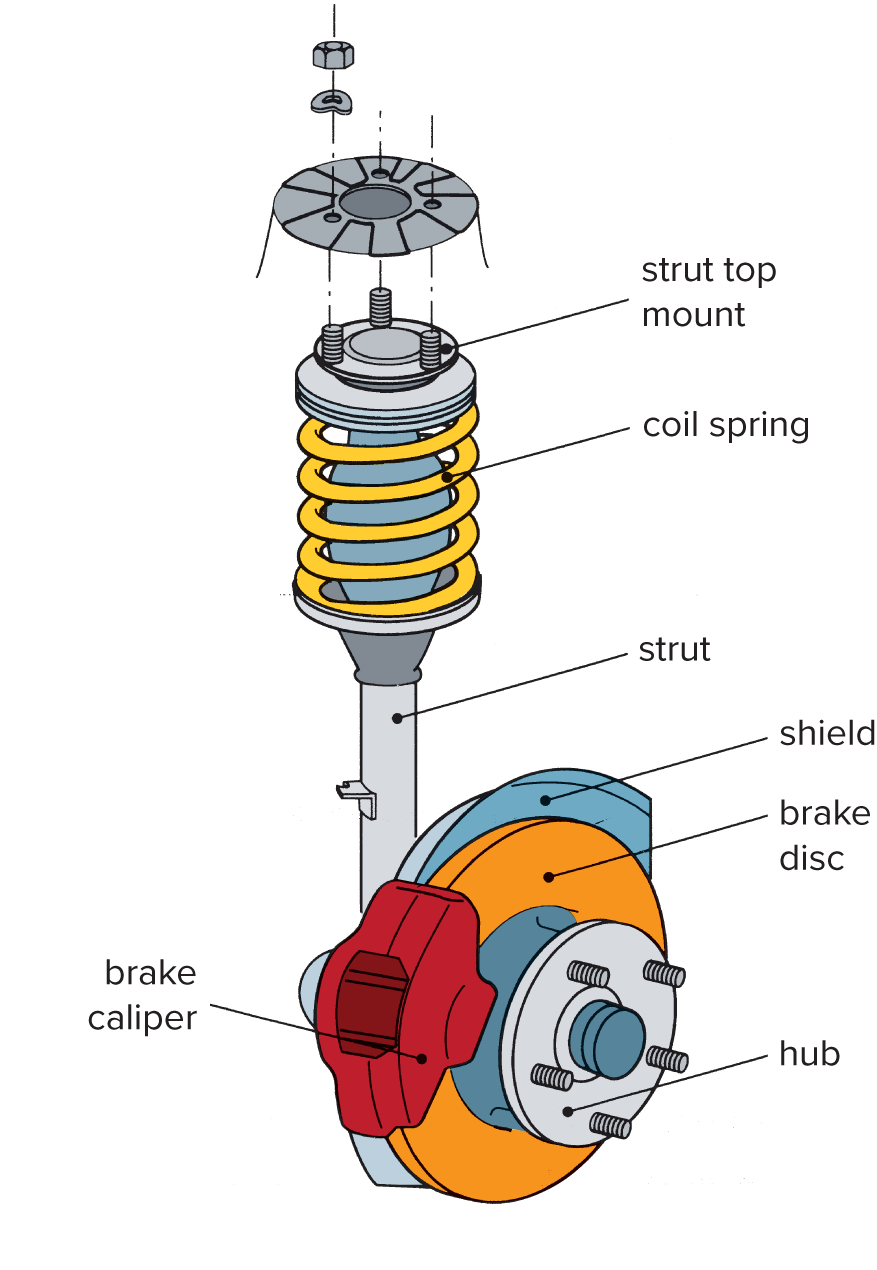
Strut-type suspension with its wheel hub and disc brake
-
Question 14
Name some of the parts in a rear-axle assembly.Reveal answerSome important parts of a rear-axle assembly include the final-drive gears (crown wheel and pinion), differential gears, and axle shafts. These components work together to transfer power from the driveshaft to the rear wheels while allowing smooth turning.
-
Question 15
Name some of the electrical parts of a vehicle.Reveal answerThe electrical system of a vehicle includes components such as the battery, alternator, starter motor, switches and controls, lights, instruments, sensors, and electrical wiring. These parts provide power for starting, lighting, charging, monitoring, and operating electrical accessories.
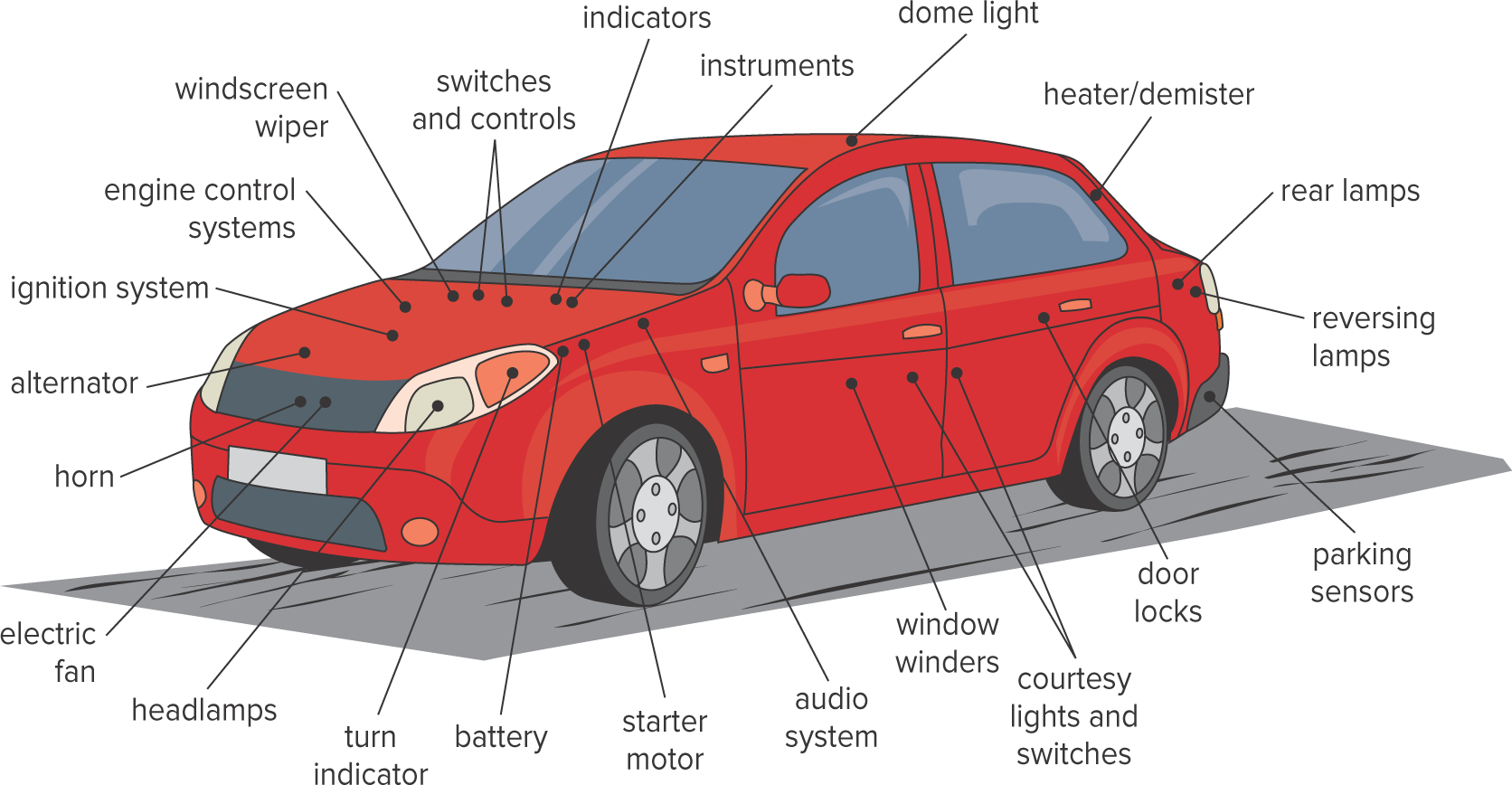
Location of various parts of the electrical system
-
Question 16
How is the alternator driven?Reveal answerThe alternator is usually driven by a belt connected to the engine crankshaft pulley. As the engine runs, the belt rotates the alternator, allowing it to generate electrical power and charge the battery.
-
Question 17
What are the main differences between a front-wheel-drive and a rear-wheel-drive vehicle?Reveal answerIn a rear-wheel-drive vehicle, power is transmitted from the engine and transmission at the front to the rear axle through a propeller shaft. In a front-wheel-drive vehicle, the engine is commonly mounted transversely, and the transaxle combines the transmission and differential into one compact assembly that drives the front wheels directly.
-
Question 18
Name the main external body parts of a passenger car.Reveal answerThe main external body parts of a passenger car include the roof, mudguards or fenders, bonnet, boot or trunk, doors, grille, bumper bars, sills, windscreens, wheel arches, rear and centre pillars, and quarter panels. These parts provide structural support, protection, aerodynamics, and passenger comfort.
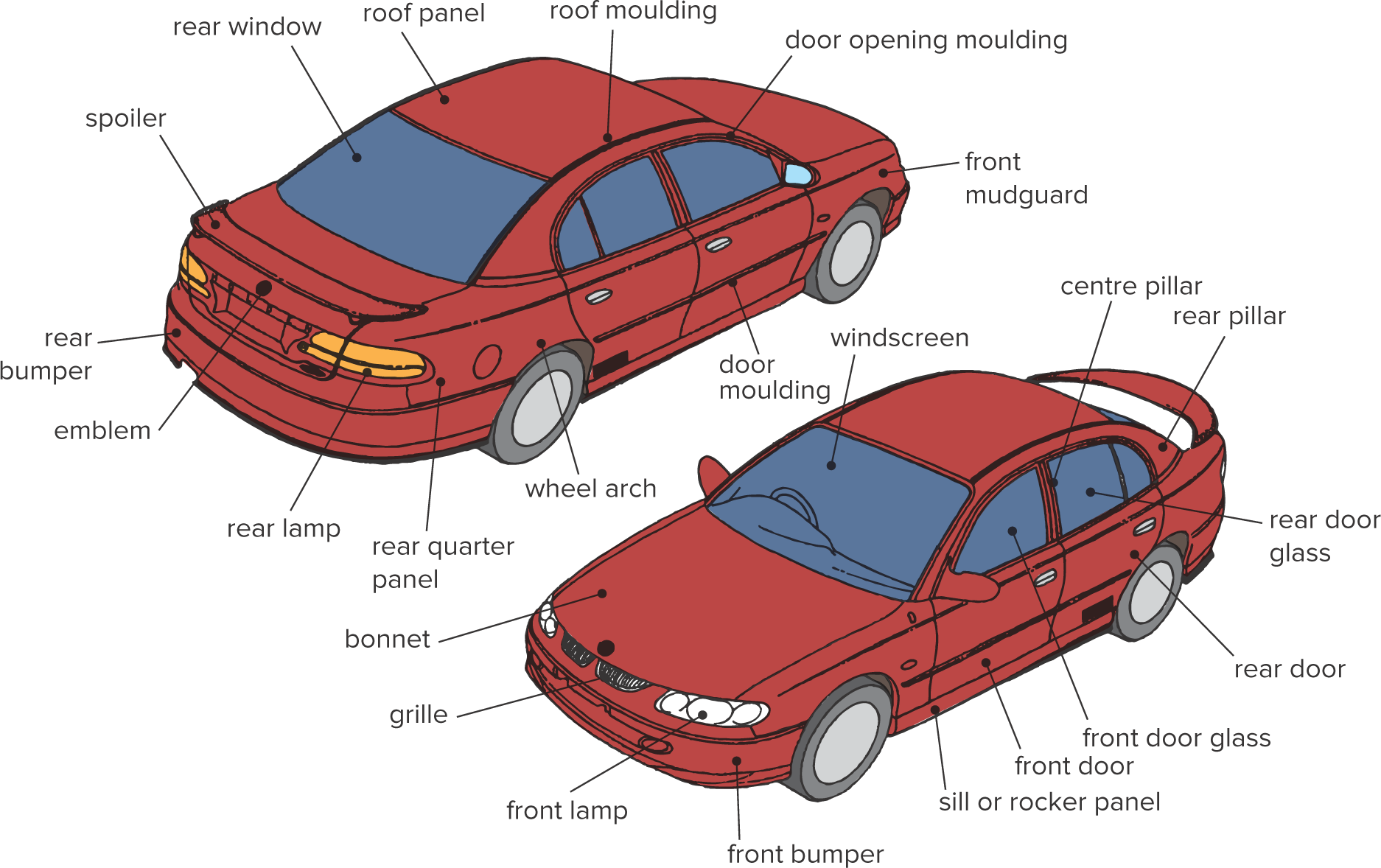
External Body Parts of a Passenger Vehicle
