Nuclear-Powered Data Centers: Argonne’s Framework for Pairing Reactors with Rising Digital Loads
How Argonne’s multi-lab study maps nuclear power to hyperscale data centers—coupling designs, siting factors, and fuel needs for 24/7 low‑carbon capacity.
The data center buildout is outpacing grid expansion. Operators need round‑the‑clock, low‑carbon power at multi‑hundred‑megawatt scale.
Argonne National Laboratory, with Idaho and Oak Ridge national laboratories, has mapped how nuclear plants could supply that demand. The team outlines coupling architectures, siting criteria, fuel needs, and near‑term capacity pathways that could make nuclear a practical power source for hyperscale facilities.
What the Multi‑Lab Study Brings to the Table
The Department of Energy report, released August 31, 2025, quantifies the size of the challenge and tests concrete integration options. It projects additional U.S. data‑center electricity demand of 24–74 GWy(e) by 2028; supplying that entirely with nuclear would require roughly 27–85 GWe of installed capacity. The authors also identify about 20–28 GWe that could be dedicated to data centers by the early 2030s through uprates, restarts, power‑purchase agreements with the existing fleet, and new builds.
Nuclear energy can deliver round‑the‑clock, reliable electricity for data centers
Five Ways to Connect Reactors and Racks
Engineers will recognize that the electrical architecture drives both reliability and regulatory complexity. The study defines five coupling options that span:
- no colocation with energy delivery via the bulk power system;
- colocation with direct connection while exporting full output to the grid;
- colocation and behind‑the‑meter delivery;
- a fully islanded microgrid; and
- a microgrid with a backup intertie.
For the non‑colocated case, interconnection is via HV/EHV transmission, typically 115–765 kV.
Options 3–5 can avoid wheeling charges and simplify power‑quality control but shift responsibility for redundancy and backup to the site owner. The report walks through example topologies that map to Tier I–IV reliability targets, showing how redundant UPS, energy storage, backup generation, and parallel distribution paths are layered to meet N+1 and 2N requirements. For an islanded configuration, multiple units or on‑site backup are essential to ride through contingencies without shedding IT load.
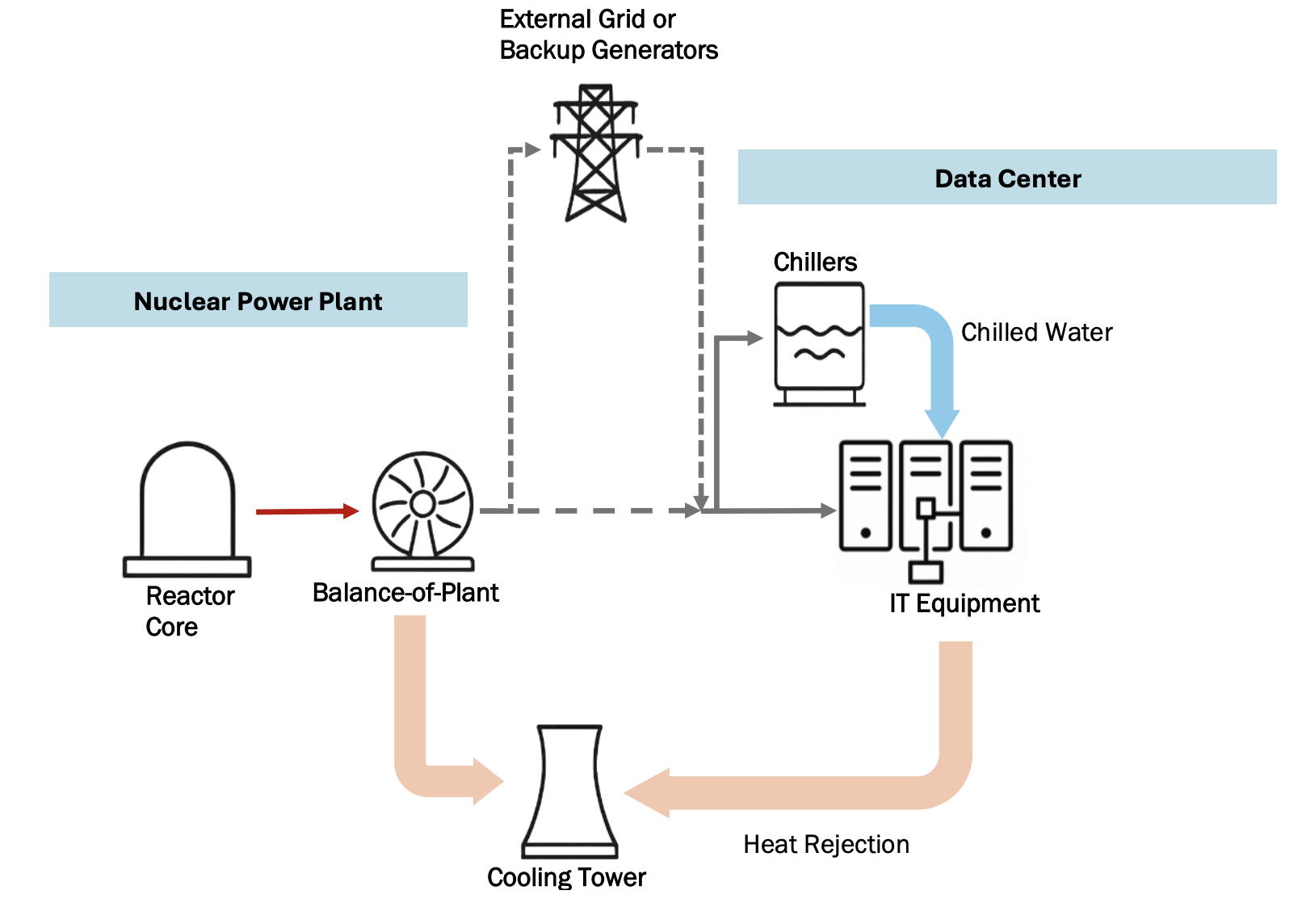
Schematic of Nuclear Power Plant and Data Center Coupling
Cooling Load and Power‑Quality Realities
Power flow is only half the picture; thermal management is the other. The analysis notes that cooling typically accounts for approximately 30–50% of data‑center energy consumption, which influences both total nuclear output sizing and auxiliary system design. Electrical sections also flag FERC requirements, fault‑tolerance targets, and transfer‑switch behavior that need to be engineered into any nuclear–data‑center coupling.
Siting With OR‑SAGE: Water, Transmission, and Fiber Decide the Map
To make siting quantitative, the team used OR‑SAGE, Oak Ridge’s GIS‑based siting tool, to evaluate both greenfield and brownfield deployments. The framework screens for water availability, nearby transmission capacity and reliability, fiber network access, workforce, and exclusion buffers; it then evaluates colocating on existing nuclear sites or repowering retired coal plants. The results are not prescriptions but show that large areas qualify once power, water, and IT backhaul constraints are modelled together.
Reactor Sizing and the Fuel Supply Question
Reactor size is matched to load shape and coupling mode. For grid‑connected or very large campuses, the study indicates that larger single units are preferred; for islanded or behind‑the‑meter systems without grid backup, multiple smaller units improve availability and maintenance flexibility. The report also quantifies HALEU (High Assay Low Enriched Uranium) needs for advanced designs discussed publicly by hyperscalers: meeting announced trajectories for Kairos Power’s KP‑FHR (~500 MWe by 2035) and X‑energy’s Xe‑100 (~1 GWe by 2040) implies ramping 19.75%‑enriched HALEU production to about 6 t/yr by 2040.
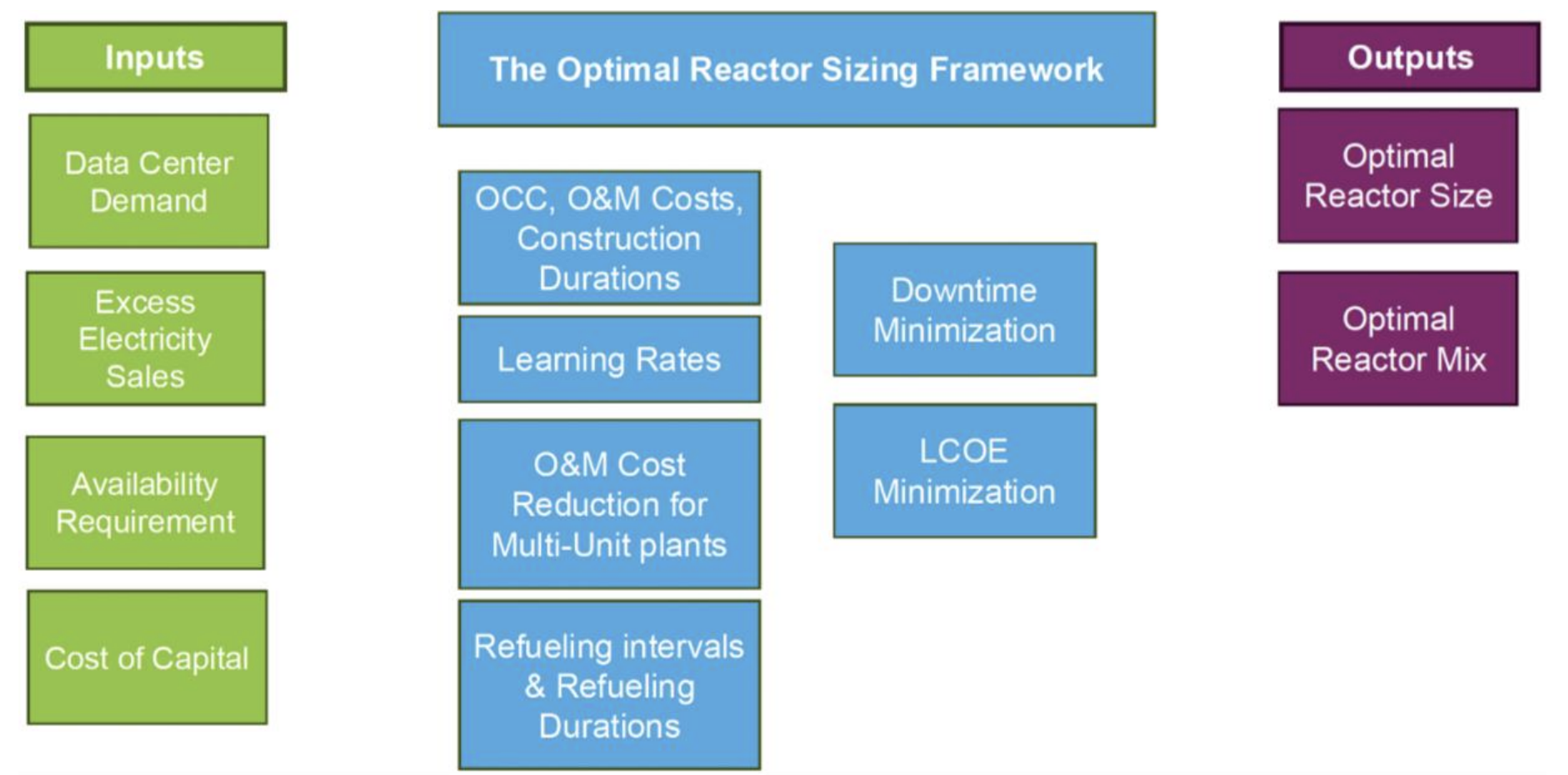
Framework for Estimating the Optimal Reactor Size for a Data Center
Economics and Jobs: Why Communities Care
The study’s socio‑economic modeling finds that a 1‑GW hyperscale data center colocated with a nuclear plant can create on the order of 1,700 operations jobs and support roughly 7,300 additional jobs through the supply chain and induced spending, with impacts generally larger in urban than rural settings. These figures reflect the combined footprint of the reactor and the data center and help explain growing interest from municipalities looking to anchor digital infrastructure with firm, clean power.
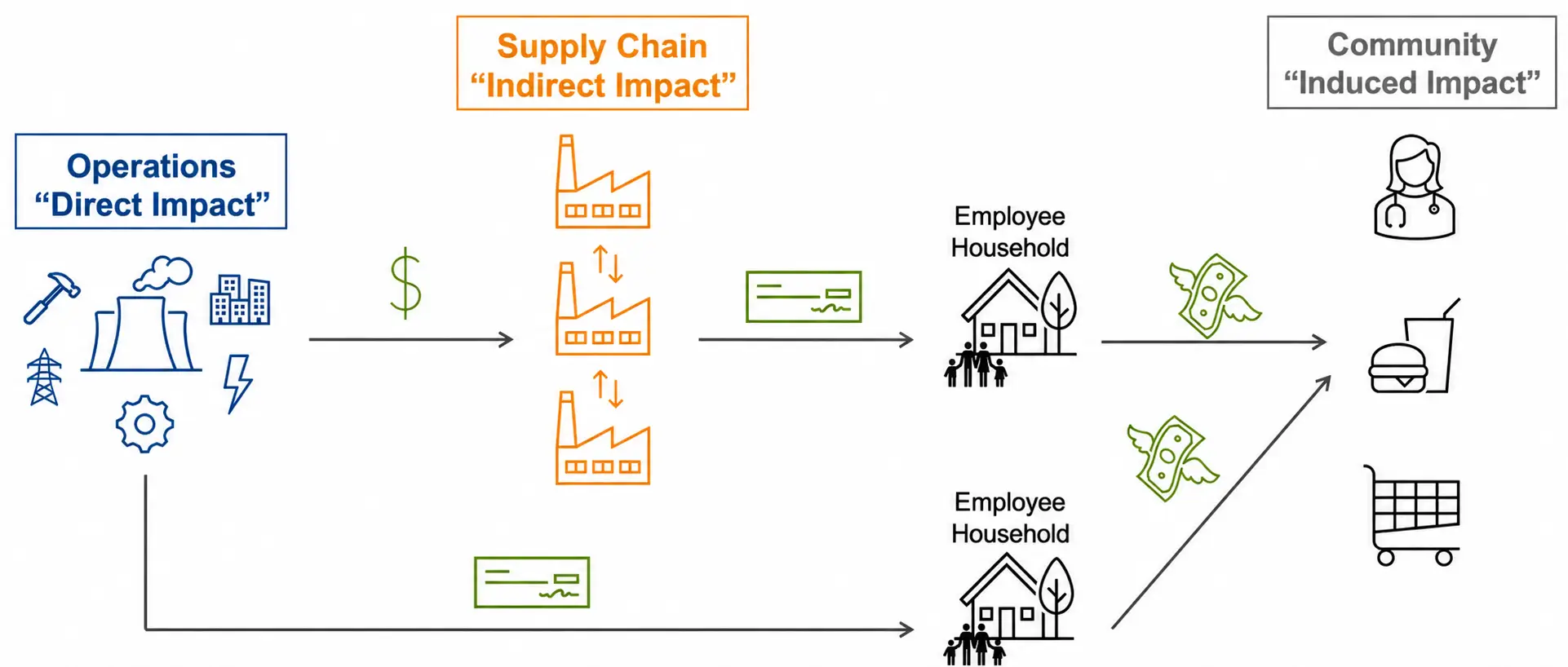
Types of Local Economic Impact Considered in the Analysis
Engineering Challenges on the Critical Path
The headline hurdles are not surprising to grid engineers: long construction timelines, licensing and regulatory reviews, water availability, and high upfront capital requirements. Argonne’s team frames actionable mitigations—restart recently retired reactors, up‑rate existing units, and leverage advanced designs such as SMRs for phased deployment and modularity—while utilities and owners engineer interconnection, protection, and compliance packages to match the selected coupling option.
Reliability engineering needs careful translation from today’s diesel‑plus‑UPS paradigms. For Tier II–IV targets, nuclear‑centric campuses will still require fast‑acting UPS and storage for ride‑through and power‑quality, plus redundant feeds or modules to achieve N+1 or 2N configurations. That places a premium on MV/LV distribution design, transfer‑trip logic, and black‑start strategies that integrate reactor dynamics with data‑hall constraints. The study’s example topologies provide a starting point for those designs.
Thermal design also matters for siting and reactor choice. High‑temperature advanced reactors may enable different cooling architectures than large LWRs, but local water constraints and WUE (Water Usage Effectiveness) targets will still bound feasibility. Engineers should budget for the cooling share of the load and assess climatic sensitivities early, as this can swing the total nuclear capacity needed for a given IT nameplate.
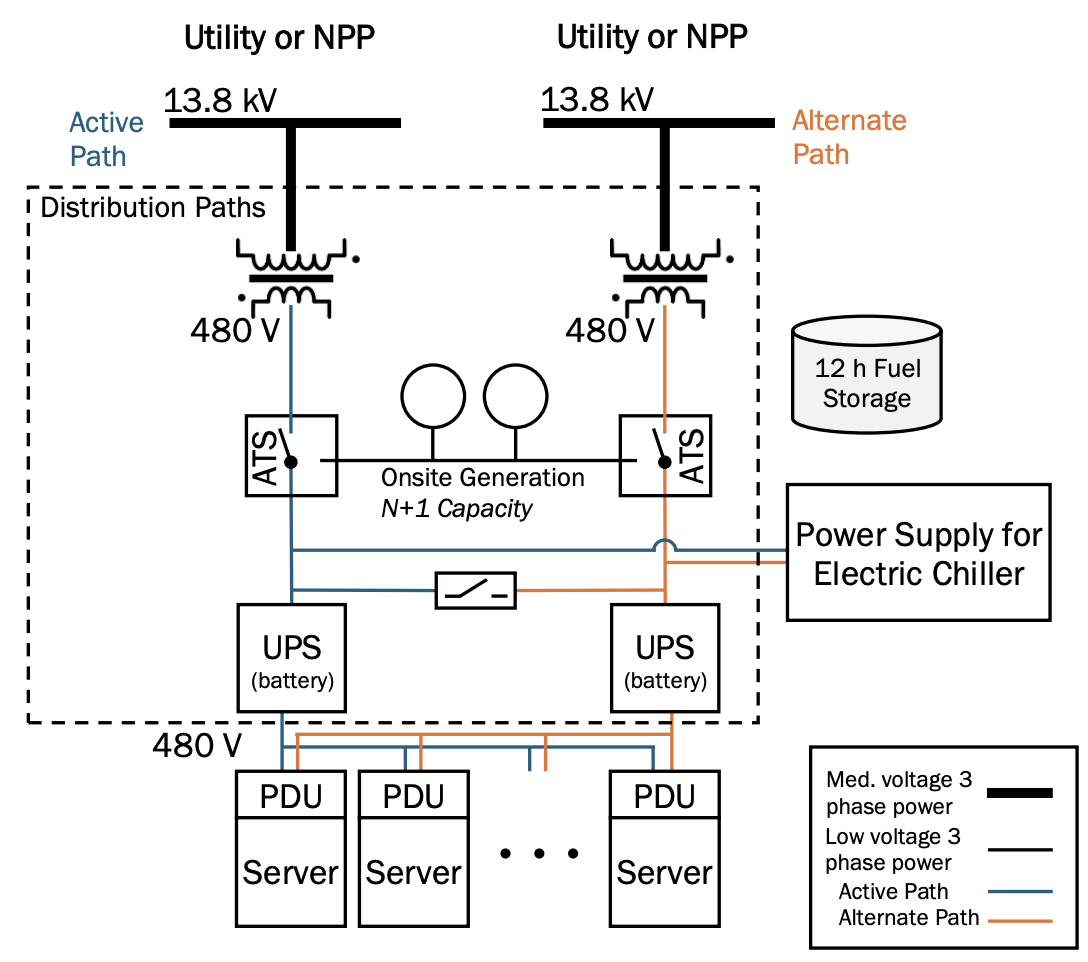
Data Center Power Distribution Topology with Redundant Capacity and a Redundant Path, Corresponding to Tier III.
Why this Matters Now
For hyperscalers, utilities, and EPCs, the Argonne‑led framework turns a broad idea into an engineering conversation with concrete options, numbers, and trade‑offs. It shows that dedicated nuclear capacity for data centers is not only technically plausible but can be staged from today’s fleet toward advanced reactors, provided that interconnection design, fuel supply, and siting are addressed in parallel.
Next steps are already identified: refine fuel and siting analyses, run detailed techno‑economic case studies, and stress‑test coupling options against reliability tiers and local constraints. If those efforts continue, nuclear‑powered data‑center campuses could move from concept to procurement within this decade—linking firm, clean generation to one of the grid’s fastest‑growing loads.