Lithium-Ion Battery Cathode Materials and their Structures
Learn about key lithium-ion battery cathode materials, their structures, performance tradeoffs, and roles in modern energy storage systems.
Cathode material is one of the key components of lithium-ion battery, which determines the working voltage, capacity, and cycle life of the battery. At present, the potential cathode materials mainly include:
- Layered-structural cathode materials (LiCoO2, LiMnO2, LiMn2O4, LiNixCoyMnzO2, and LiNi0.8Co0.15Al0.05O2),
- Spinel structural materials (LiMn2O4 and LiNi0.5Mn1.5O4),
- Polyanionic materials (LiFePO4, Li3V2(PO4)3, and Li2FeSiO4)
The ideal cathode material should have the following characteristics:
- high capacity;
- high oxidation reduction potential;
- good chemical and thermal stability;
- high ionic and electronic conductivity;
- high safety;
- low price.
Layer-Structured Cathode Materials
Common layer-structured cathode materials mainly include lithium cobalt oxide (LiCoO2), lithium nickel oxide (LiNiO2), and lithium manganese oxide (LiMnO2), all of which exhibit the crystal structure of α-NaFeO2.
Among them, LiCoO2 with rhombohedral structure is the first commercialized layered cathode material, and the O atom is formed hexagonal dense accumulation according to the order of ABCABC (Figure 1). It is first reported by Goodenough in 1981, the theoretical specific capacity of LiCoO2 is 274 mAh g−1, and the average working voltage is 3.9 V (vs. Li/Li+).
However, during the actual charging process, the layer structure of Co–O octahedron will become unstable and gradually transition to spinel phase when the amount of lithium removal is more than 50% and thus results in the decrease of battery capacity. Thus, the actual reversible specific capacity of LiCoO2 can only be up to 140 mAh g−1. In addition, the high cost and toxicity of Co limit its application in large-scale energy storage system.
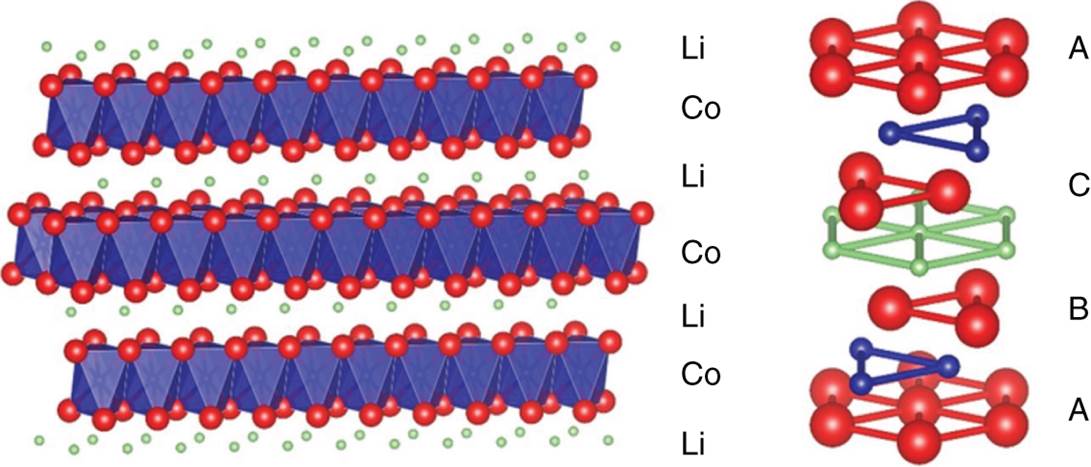
Figure 1 Crystal structure diagram of LiCoO2 (red: oxygen, purple: cobalt, green: lithium).
As shown in Figure 2, the layered LiNiO2 cathode materials have a theoretical specific capacity of 274 mAh g−1, but only 140 mAh g−1 can be used in the actual charging and discharging process.
During the charging process, lithium ions are removed from the interlayer of LiNiO2, due to the approach of the Ni2+ ion radius (0.69) and Li+ (0.76), it is very easy to occupy the lithium position and cause the mixed arrangement of lithium nickel, which will lead to the destruction of the original layered structure, and some lithium ions cannot be re-embedded into LiNiO2 during discharging and thus cause the rapid attenuation of reversible capacity. In addition, it is very difficult to synthesize and unstable at high temperature, the structure will change from hexagonal phase to cubic phase.
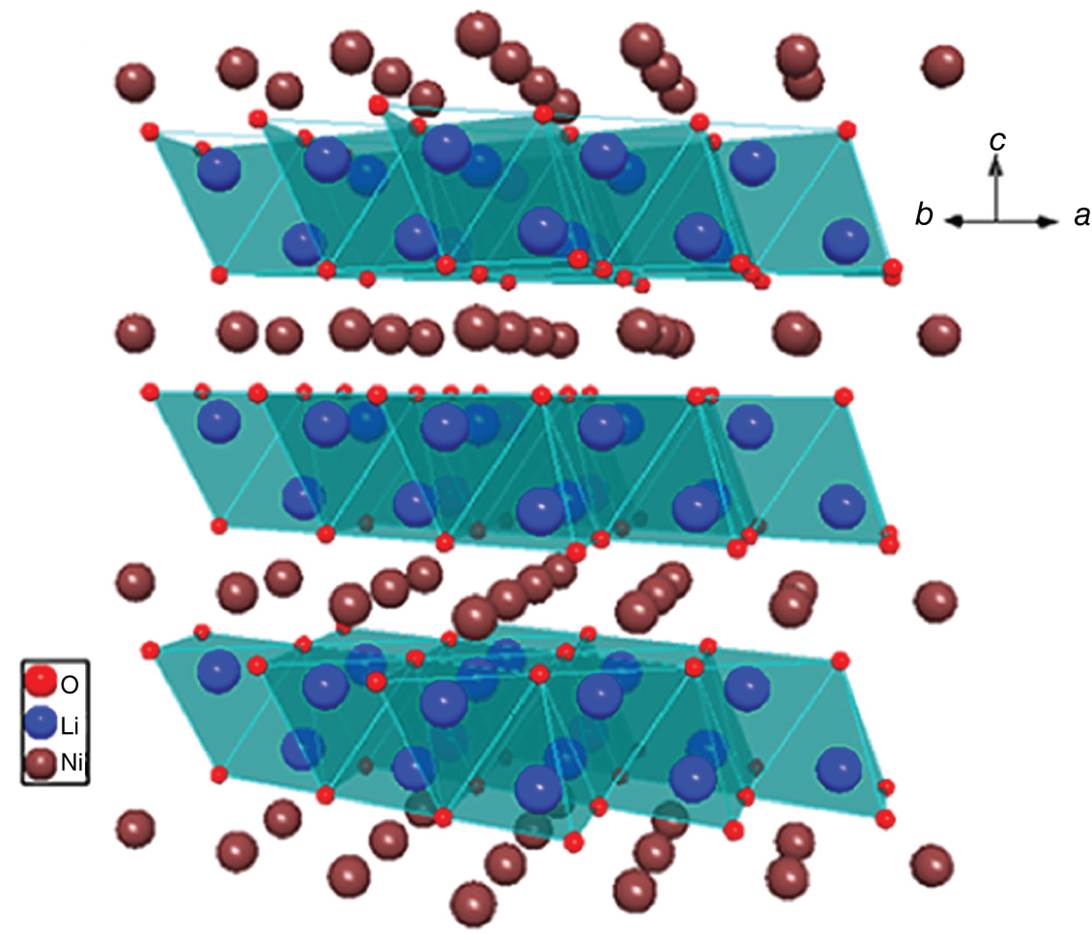
Figure 2 Crystal structure diagram of LiNiO2 (red: oxygen, brown: nickel, blue: lithium).
The theoretical specific capacity of LiMnO2 is 285 mAh g−1, and the actual specific capacity is about 165–195 mAh g−1.
As shown in Figure 3, the layer-structured LiMnO2 belongs to metastable phase, in which Mn3+ is prone to disproportionation to form Mn2+ and Mn4+. Meanwhile, Mn3+ is easy to dissolve and occupy the position of Li+ during the charging process, finally forming Jahn–Teller distortion and causing the damage of layered structure. In addition, it is difficult to synthesize layer-structured LiMnO2 because it is easy to transform into rhombic or spinel structure; thus, the application of pure LiMnO2 as cathode materials is difficult.
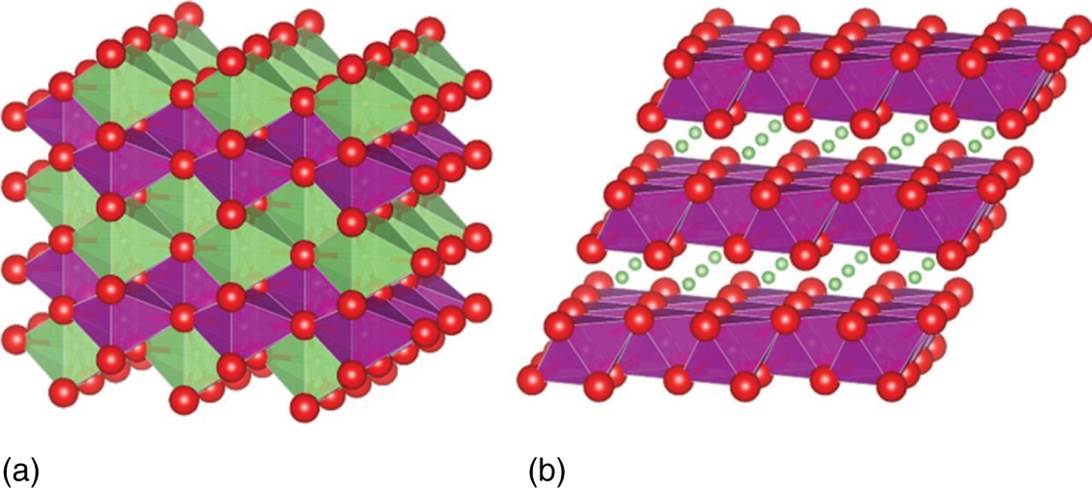
Figure 3 (a) Orthorhombic LiMnO2 (Pmmn), (b) monoclinic LiMnO2 (C2/m); (red: oxygen, pink: manganese, green: lithium).
As cathode materials of lithium-ion batteries, LiCoO2, LiNiO2, and LiMnO2 exhibit their own shortcomings as cathode, and they cannot be widely used in the field of power batteries. However, it is possible to obtain new cathode materials with high capacity, high voltage, and high cycle stability by preparing Li–Ni–Co–Mn–O ternary materials, in which
- LiCoO2 has a higher electron and ion transfer rate to ensure the rate performance,
- the higher capacity of LiNiO2 can provide the cathode a high capacity, and
- LiMnO2 mainly plays a role in stabilizing the structure.
Theoretically, the three components can form any uniform solid solution while maintaining the original layered structure. In the ternary system, Ni, Co, and Mn elements can be randomly distributed in the transition metal layer, and Li still occupies the original position.
Among them, the high capacity of nickel-rich ternary cathode material (more than 60% Ni in the composition) makes it a potential cathode material for the current development of high-energy-density power battery. Therefore, the current research field is mainly focused on the area near the LiNiO2 component. As shown in Figure 4, it mainly includes the common LiNi1/3Co1/3Mn1/3O2 (NCM333), LiNi0.5Co0.2Mn0.3O2 (NCM523), LiNi0.6Co0.2Mn0.2O2 (NCM622), and LiNi0.8Co0.1Mn0.1O2 (NCM811). However, these kinds of nickel-rich cathode materials exhibit some drawbacks for the commercialization, including:
- capacity fading during long-term cycling,
- poor rate capacity,
- thermal instability,
- short storage lifetime at elevated temperature,
- high residual lithium,
- gas evolution,
- serious safety concern,
- Li/Ni cation mixing
Thereby, some crucial mechanisms are proposed to explain these problems:
- side reaction of electrolyte catalyzed by the delithiated NCM at voltages above 4.3 V with a concomitant oxygen release;
- dissolution of the transition metal ions corroded by HF acid from the electrolyte;
- layered-to-spinel phase transformation and occurrence of NiO-type phase;
- formation of micro-crack and particle fracture originated from internal strain, expansion, and contraction of lattice volume during cycling. The micro-cracks enlarged along the parasitic reaction area between active materials and the electrolyte and accelerated the fracture of particles and decomposition of the electrolyte.
- Finally, the pulverization of bulk cathode particles occurred. The pulverized and separated particles cannot participate in electrochemical reaction, resulting in the capacity decay (Figure 5).
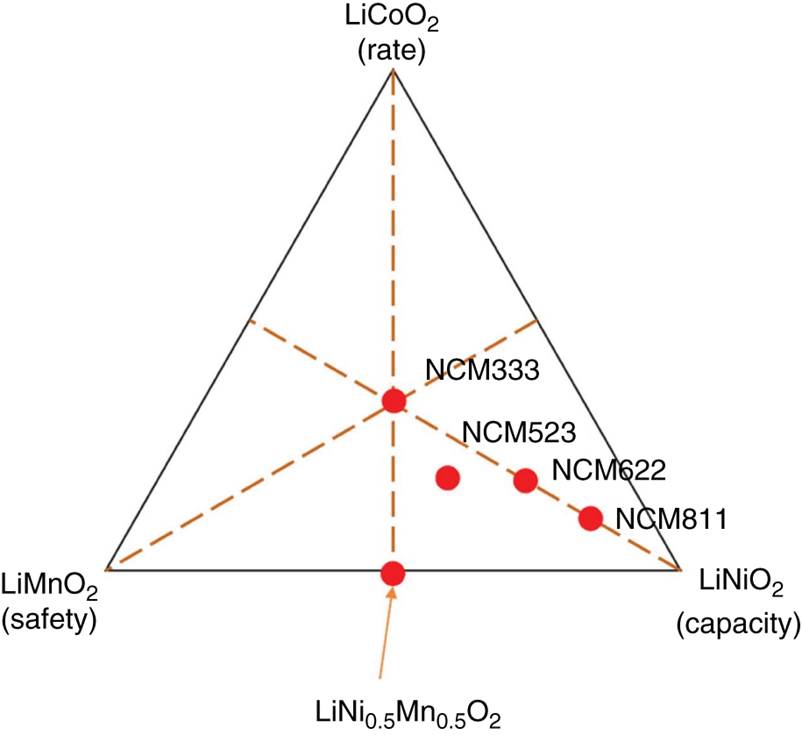
Figure 4 Phase diagrams of LiNiO2, LiCoO2, and LiMnO2 ternary systems and some representative components.
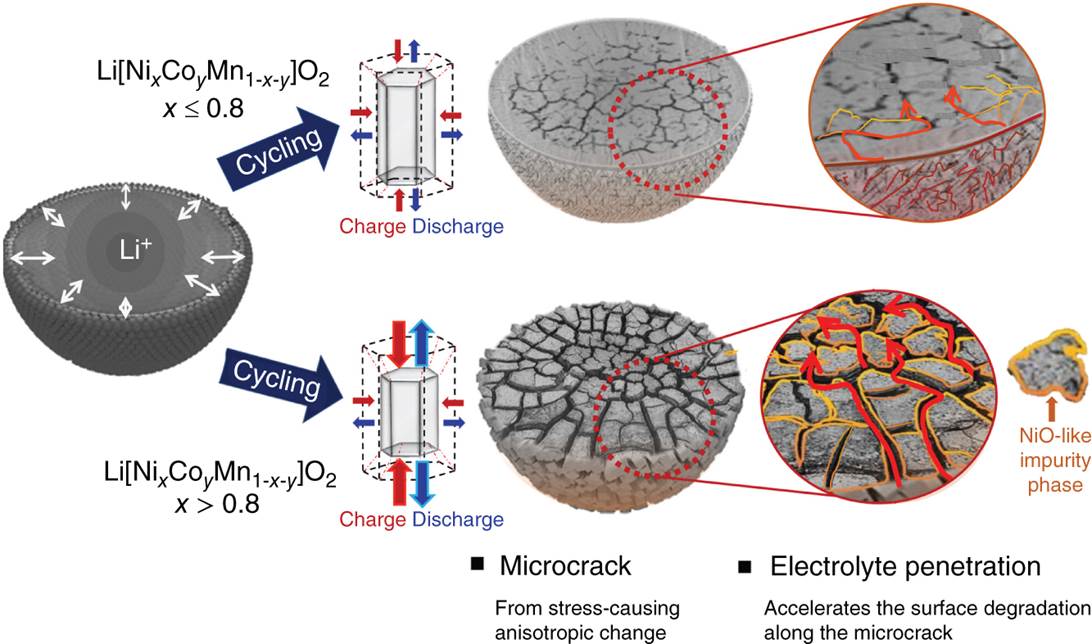
Figure 5 Capacity fading scheme of Ni-rich cathode materials.
In addition to the common LiNixCoyMn1−x−yO2 (NCM) ternary cathode materials, there is also a special high-capacity ternary cathode material, which is LiNi0.8Co0.15Al0.05O2 (NCA). The actual specific capacity is as high as 220 mAh g−1. A small amount of Al can stabilize the layered structure.
Compared with NCM, NCA has higher structural stability. However, the amphoteric characteristics of Al element make it difficult to synthesize the stable NCA precursor. At present, the NCA cathode materials have been successfully developed by Panasonic in Japan and Tesla in USA, and the energy density of 300 wh kg−1 of single cell can be obtained by matching the NCA with silicon/carbon anode.
Spinel-Structured Cathode Materials
LiMn2O4 with spinel structure belongs to cubic system, and the space group is Fd-3m. Among them, O atoms are arranged in cubic dense packing, Li ions are in the tetrahedral sites, and Mn occupies half of the octahedral sites (Figure 6). Thus, LiMn2O4 has three-dimensional lithium-ion diffusion channel and excellent rate performance, which is suitable for high-power lithium-ion batteries.
The theoretical specific capacity of LiMn2O4 is 148 mAh g−1, and the working voltage is 4.0 V (vs. Li/Li+). However, Jahn–Teller distortion caused by entering the octahedron sites of lithium ions will occur during the charging and discharging process, which will affect the reversible capacity and cycle performance of the material. Therefore, the actual specific capacity of LiMn2O4 can only be 110–120 mAh g−1.
In addition, Mn is easy to dissolve in the electrolyte, and the self-discharge will lead to the decline of reversible capacity of the battery.
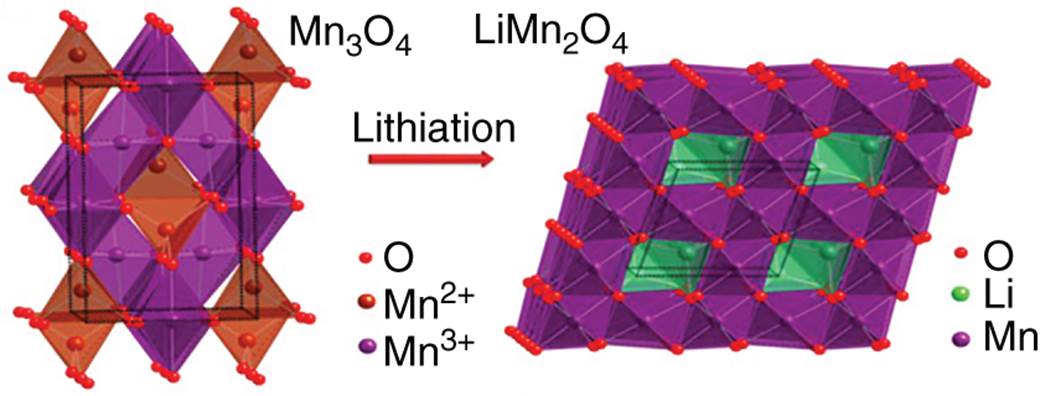
Figure 6 Crystal structures of spinel Mn3O4 and spinel LiMn2O4.
LiNi0.5Mn1.5O4 can be formed by replacing part of Mn in LiMn2O4 with Ni. During charging and discharging process, the valence state of Mn in LiNi0.5Mn1.5O4 remains unchanged and only Ni2+ and Ni4+ change, which will ensure the high structural stability of the materials. At the same time, the working voltage is also increased from the original 4.0 to 4.7 V, which helps to improve the energy density of the battery.
According to the different positions occupied by Ni and Mn, LiNi0.5Mn1.5O4 can be divided into Fd-3m and P4332 space group. In comparison, LiNi0.5Mn1.5O4 with Fd-3m space group has better structural stability and cycle performance. However, the ordinary organic electrolyte will decompose when the voltage is charged to 4.7 V, resulting in the rapid degradation of the battery capacity deterioration of cycle performance.
Olivine-Structured Cathode Materials
Lithium iron phosphate (LiFePO4) with olivine structure has been widely used in power batteries for its excellent cycling performance and safety. LiFePO4 of orthorhombic system belongs to the Pnma space group, and its theoretical specific capacity is 170 mAh g−1, the working voltage is about 3.4 V (vs. Li/Li+).
During the charging and discharging process, Li+ occupied in octahedral sites can be transmitted in one-dimensional channel, accompanied by the phase transition of LiFePO4 and FePO4. Due to the strong bonding energy of polyanion PO43−, it can still maintain the structural stability when Li ions are completely removed from LiFePO4. However, due to the low ion and electric conductivity of pure LiFePO4, it is necessary to optimize the structure of LiFePO4 for practical application.
To sum up, LiFePO4 with low cost and mature synthesis technology is suitable for energy storage system with low energy density requirements (Figure 7).
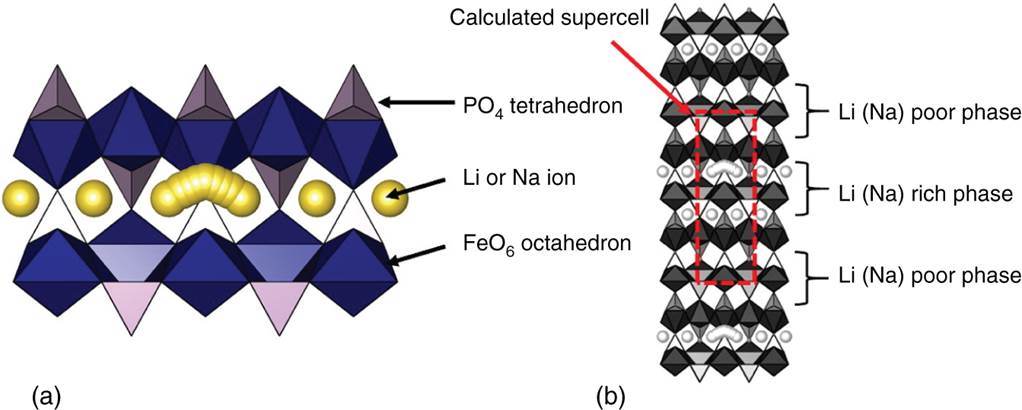
Figure 7 Crystal structure diagram of LiFePO4.
Key Takeaways
Cathode materials largely determine the voltage, capacity, and lifespan of lithium-ion batteries, with major classes including layered (LCO, NCM, NCA), spinel (LMO), and olivine (LFP) structures.
Layered materials offer high energy density but face stability, cost, and safety challenges—especially in nickel-rich compositions—while ternary systems balance performance by combining Ni, Co, and Mn.
Spinel materials provide high power capability and fast ion diffusion but suffer from capacity fading and electrolyte instability at higher voltages.
Olivine materials like LiFePO₄ deliver excellent thermal stability, safety, and cycle life at lower cost, though with lower conductivity and energy density, making them well-suited for robust and long-life energy storage applications.