Grid‑Interactive Data Centers: Automation Turns Compute Hubs into Flexible Power Assets
Modern data centers are colliding with grid realities. AI workloads, higher rack densities, and fast build schedules are stressing connection, capacity, and stability.
Hitachi Energy argues the role of the data center is shifting from passive load to active energy asset. Its core idea: use utility‑grade automation to coordinate HV–MV–LV power systems so facilities can deliver uptime and grid‑level flexibility at once.
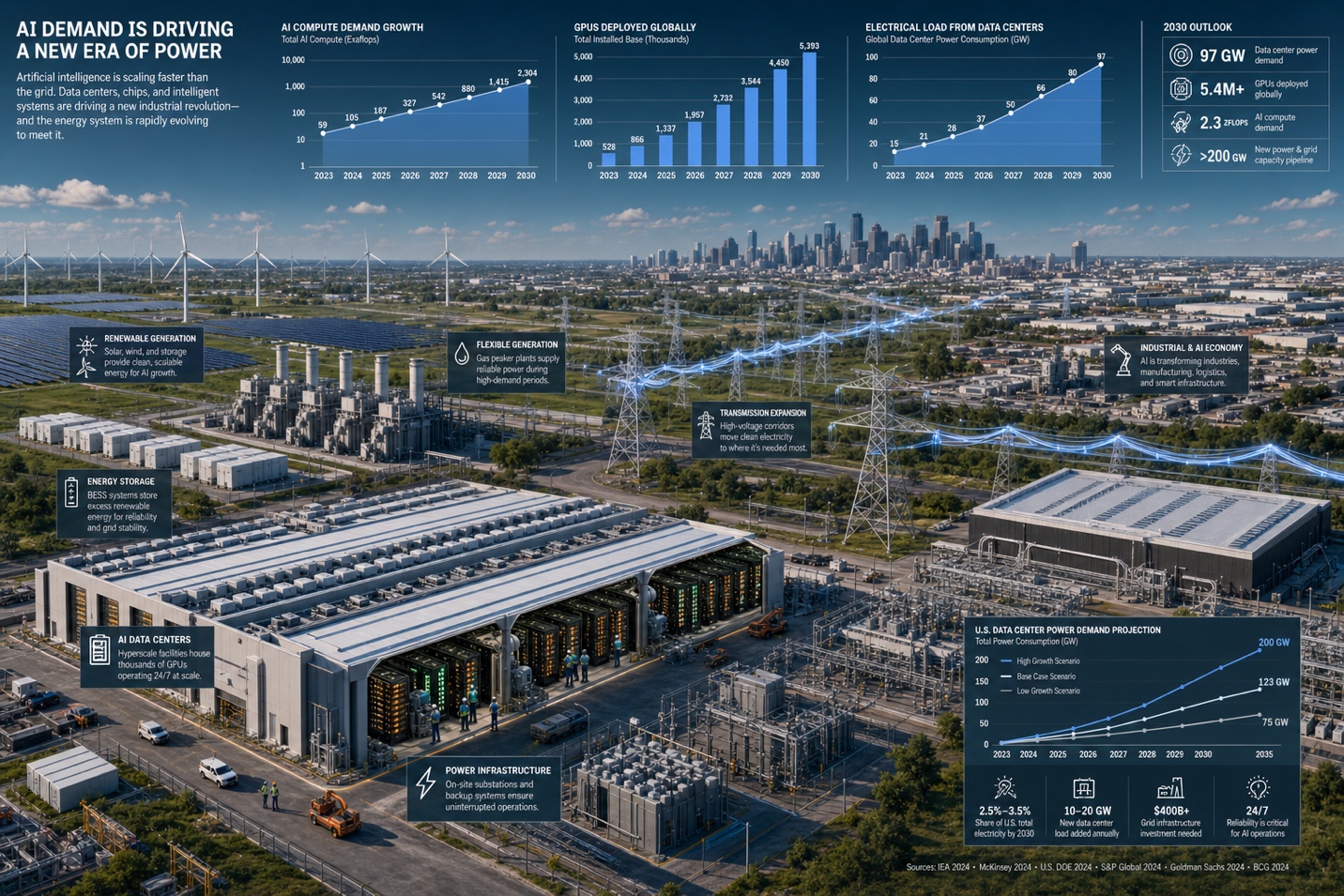
AI Demand is Reshaping the Electric Grid
From Consumer to Energy Participant at the Point of Interconnection
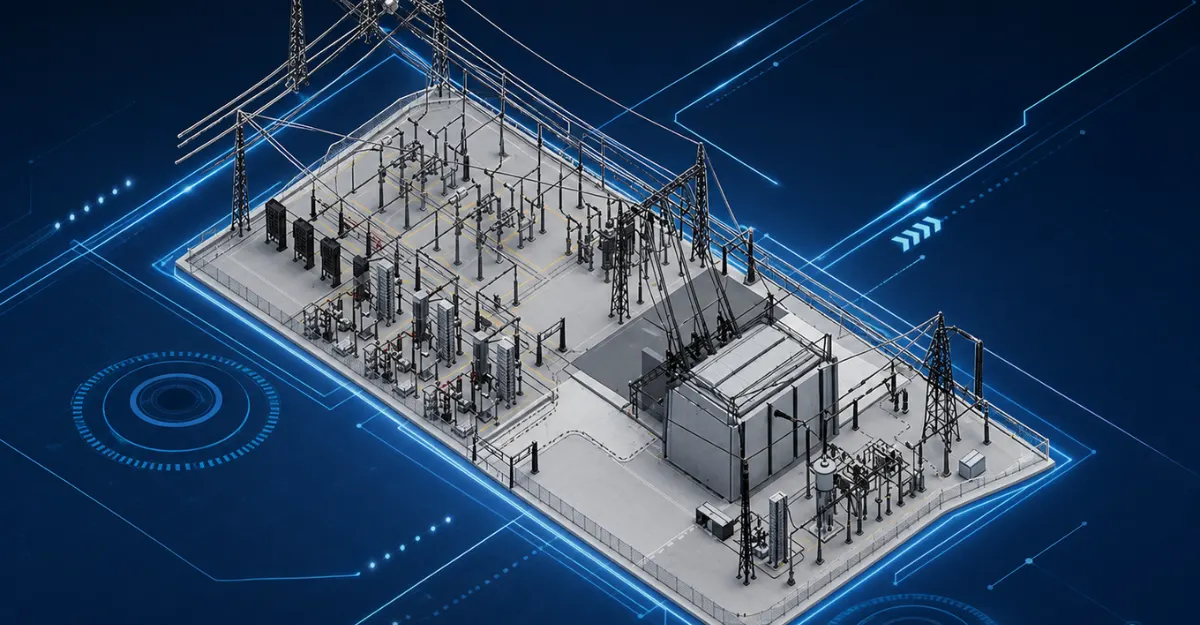
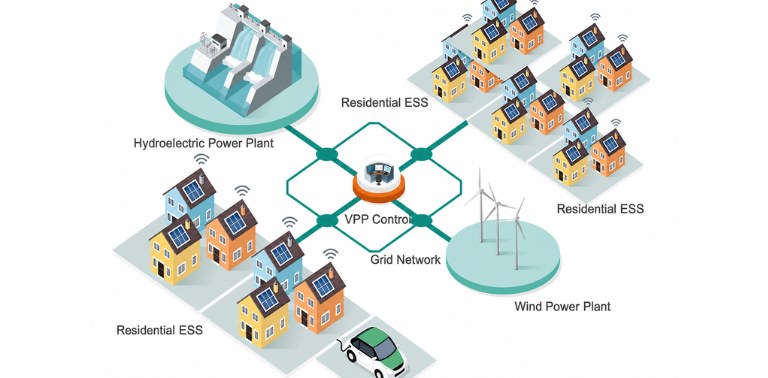
The legacy model was simple: the grid supplied and the data center consumed. That separation no longer holds. Hyperscale sites now tie directly into high‑voltage substations, add on‑site generation and large battery systems, and operate across multiple voltage domains with responsibilities that look a lot like a utility’s—asset health, power quality, and grid‑code compliance included.
Why it matters: grid planners are watching data center load accelerate. The IEA’s Electricity 2026 outlook flags data centers and AI as major demand drivers, while EPRI projects U.S. data centers could rise from roughly 4–5% of electricity use today to 9–17% by 2030. Those trajectories raise the bar for interconnection performance and operational discipline.
The “Hidden Layer” that Makes Power Behave: Automation
Transformers, switchgear, and BESS get attention, but the differentiator is the control layer that binds them. Hitachi Energy frames this as a high‑availability, cyber‑secure automation architecture that monitors HV, MV, and LV, orchestrates substations and storage, and executes fast responses to step changes in AI loads and grid events—targeting five‑nines availability (99.999%) at the facility power level. In practice, it’s a utility‑style SCADA, protection, and automation stack adapted to data center time constants and reliability expectations.
For engineers, the design target is clear: deterministic control, secure communications across OT networks, and validated failover paths so that protective actions, ride‑through behaviors, and load‑shaping commands are both fast and predictable.
"Five-nines" availability (99.999%) is the gold standard for high-reliability systems, allowing for just 5 minutes and 15 seconds of downtime per year.
From Ride‑Through to Ramp‑Rate Control
As AI clusters introduce large, rapid power ramps, grid operators are tightening technical requirements. Expect voltage and frequency ride‑through, programmable ramp‑rate limits, load smoothing, and documented event responses. Meeting these rules pushes facilities to coordinate UPS assets, BESS, and power conversion systems as a single controllable resource rather than isolated islands. Hitachi Energy’s position is that flexibility—beyond availability—is now the differentiator for securing connections and accelerating approvals.
Independent studies echo this shift. EPRI’s “Powering Intelligence” scenarios highlight the system‑level impact of AI‑driven load growth and the value of flexible demand and storage to manage it. A recent technical review finds grid‑interactive UPS/BESS can deliver frequency support, voltage ride‑through, and demand smoothing when integrated with site controls—capabilities that align directly with emerging interconnection rules.
Why 800 V DC is on the Table
One architectural response is to simplify the conversion chain. Traditional designs step AC through multiple levels before rectification at the server. New “grid‑to‑rack” approaches convert once at the perimeter and distribute high‑voltage DC—often around 800 V—toward the rack, where compact converters feed the IT bus. Industry analyses point to efficiency gains, higher rack‑level power density, and simpler integration with batteries and on‑site renewables.
The trend is tied to AI rack power. Studies and vendor roadmaps cite rack powers moving well beyond 100 kW—some aiming toward 200 kW and higher—where HVDC distribution can reduce copper, switchgear count, and losses while easing thermal headroom in power rooms. For engineers, the practical considerations include DC protection coordination, converter fault energy management, touch‑safe design, and harmonics/EMC with large rectifier stages.
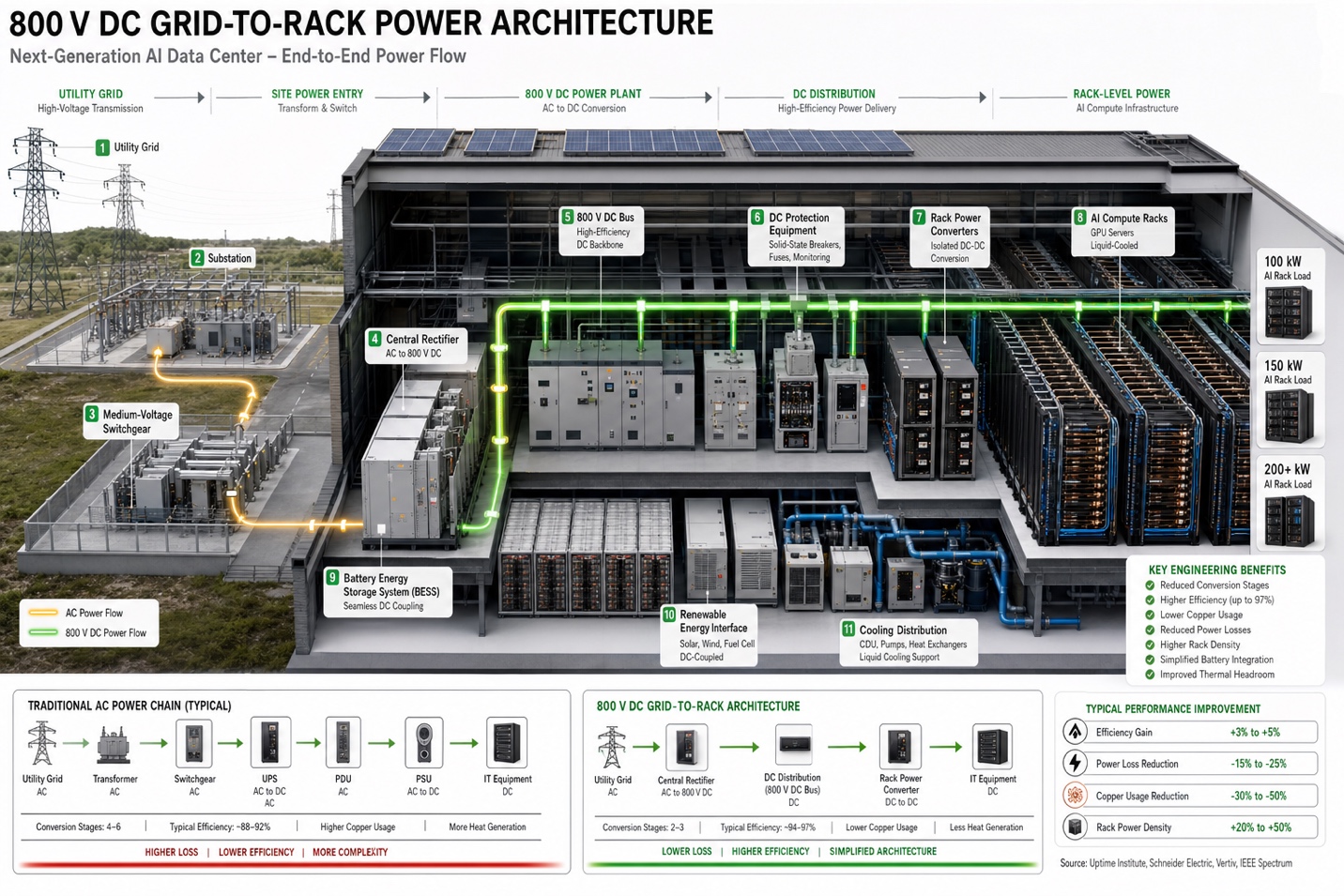
Enabling the Next Generation of 100–200+ kW AI Racks Through Higher Efficiency, Reduced Losses, and Simplified Power Architecture
Standardize to Scale
Speed‑to‑power is now a competitive metric. Rather than bespoke one‑offs, operators are embracing pre‑engineered power blocks and reference designs spanning HV, MV, and LV—complete with documented protection settings, automation templates, and compliance artifacts. Hitachi Energy’s strategy is that “design once, deploy many” reduces engineering risk and compresses delivery timelines while improving repeatability across regions and grid codes. For global programs, this standardization also accelerates training, spares strategies, and cybersecurity hardening.
Lifecycle Control
Instead of treating substation, distribution, UPS, and controls as separate projects, leading teams are adopting a lifecycle view:
- grid studies and connection strategy up front;
- modular substations and energy hubs in build;
- real‑time performance optimization in operations; and
- condition‑based maintenance governed by asset analytics
The goal is closing the loop between design assumptions and live behavior to sustain reliability as density and utilization rise.
External context supports this integrated model. The IEA notes global electricity growth averaging 3.6% annually through 2030, even as clean generation accelerates, which means connection queues, curtailment dynamics, and system constraints will persist. Facilities that can actively manage their net load profile will be better neighbors—and better positioned to monetize flexibility where markets allow.
What to Build Now
- Treat the facility electrical system as a grid‑connected power plant. Specify automation first, then the hardware it coordinates.
- Engineer for flexibility: define ride‑through curves, ramp‑rate envelopes, and BESS/UPS dispatch logic that protect both uptime and the interconnection.
- Evaluate grid‑to‑rack HVDC where densities and footprint justify it; verify protection, maintenance practices, and conversion efficiency via lab and HIL testing.
- Standardize designs and commissioning scripts to replicate reliably across sites and regions.
Power Engineering is Now a First‑Order Constraint
AI has moved power from background utility to strategic system. The emerging blueprint—utility‑grade automation, grid‑compliant flexibility, simplified conversion via HVDC where appropriate, and standardized, lifecycle‑managed designs—positions data centers as capable participants in the power system rather than fragile loads at its edge. Given credible projections for demand growth and the operational expectations of hyperscale computing, this is more than a design choice; it is how new capacity reaches the grid on time and stays there reliably.