Direct Current Fundamentals
Electrostatics
-
Question 1
What is static electricity?
Reveal answerStatic electricity is an accumulation of electric charge that remains at rest on the surface of a material. It is called “static” because the charges are not moving continuously through a conductor like electric current. Early experimenters used the term to distinguish stationary electric charges from current electricity, even though both are caused by the behavior and movement of electrons.
-
Question 2
Is static electricity more often noticed on conductors or insulators? Why?
Reveal answerStatic electricity is more often noticed on insulators because excess or missing electrons can remain on the surface for a long time. In conductors, electrons move very easily, so excess charges quickly spread out or flow away, making static charges harder to maintain.
-
Question 3
Can conductors be charged?
Reveal answerYes. Conductors can be charged if they are isolated from other conductors by insulating supports. The insulating material prevents the excess electrons from flowing away to ground or to another conductor.
-
Question 4
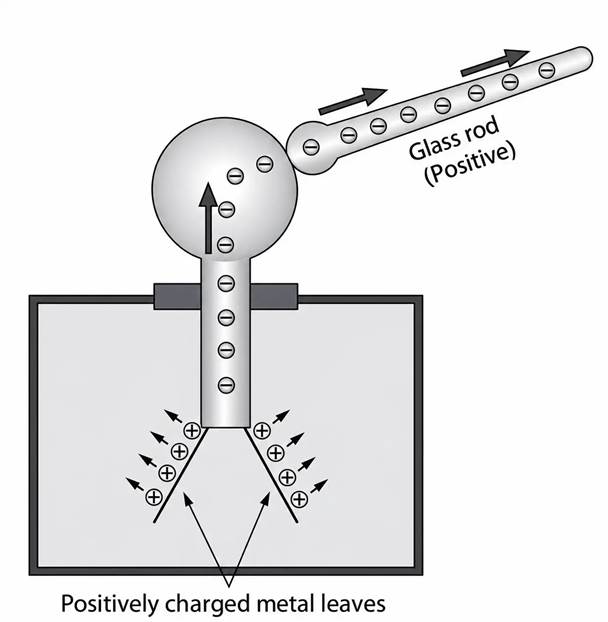
Describe what happens when a positively charged object comes near but does not touch a positively charged electroscope.
Reveal answerWhen a positively charged object is brought near but does not touch a positively charged electroscope, it attracts electrons toward the top of the electroscope. This leaves the metal leaves with a greater positive charge due to the loss of electrons. Since both leaves are now more strongly positively charged, the repulsive force between them increases and the leaves spread farther apart.
-
Question 5
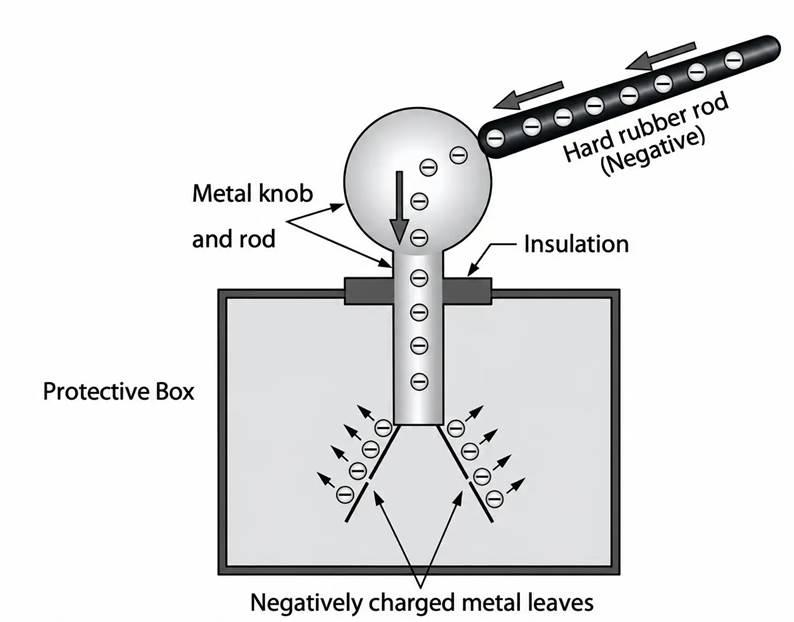
What happens when a negatively charged object comes near a positively charged electroscope?
Reveal answerWhen a negatively charged object is brought near a positively charged electroscope, it repels electrons downward toward the leaves. The added electrons reduce or may even overcome the positive charge on the leaves, decreasing the repulsive force between them and causing the leaves to move closer together.
-
Question 6
What is electrostatic induction?
Reveal answerElectrostatic induction is the process of charging an object without direct contact by bringing a charged object close to it. The nearby charge causes electrons within the object to move or redistribute, creating regions of positive and negative charge. If grounding is used during this process, the object can become permanently charged.
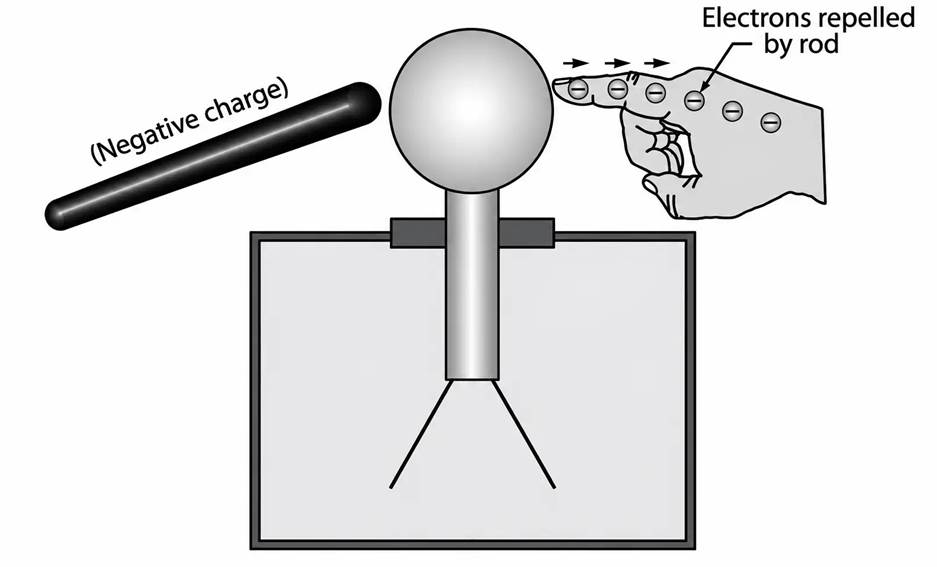
Electrostatic charges can be induced from one object to another
-
Question 7
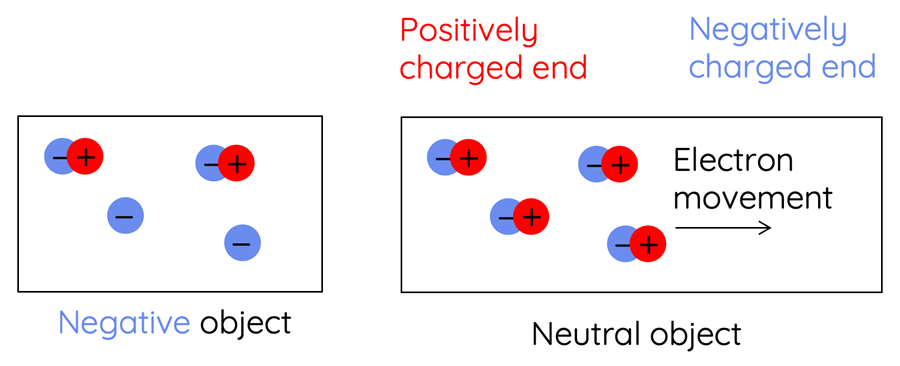
When a negatively charged object approaches a neutral object, what sort of charge is induced on the neutral object?
Reveal answerWhen a negatively charged object approaches a neutral object, it repels electrons away from the nearby region of the neutral object. This causes the side closest to the negatively charged object to become positively charged, while the opposite side becomes negatively charged due to the accumulation of electrons. This separation of charges is called electrostatic induction.
-
Question 8
Charged objects are said to possess energy. Explain.
Reveal answerElectrons tend to leave a negatively charged object. A positively charged object attracts electrons. When these electrons move, they cause heat or do some kind of work on the material they pass through. This ability to do work is called energy.
-
Question 9
What are electrostatic lines of force?
Reveal answerElectrostatic lines of force are imaginary lines used to show the direction and strength of the electric field around charged objects. The lines indicate the direction a positive charge would move if placed in the field. A greater number of lines represents a stronger electric force or field intensity.
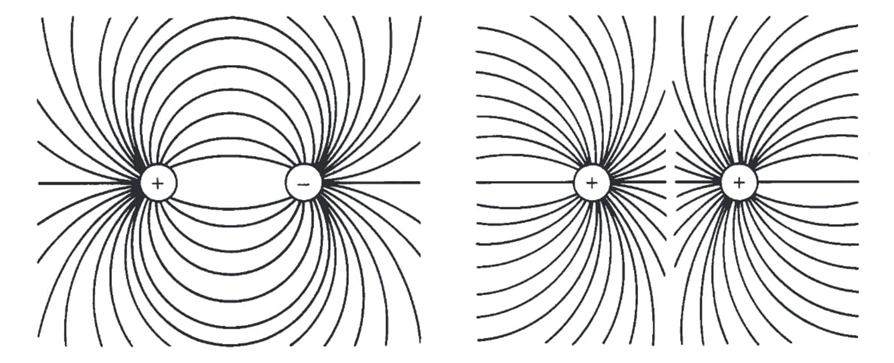
Electrostatic lines of force
-
Question 10
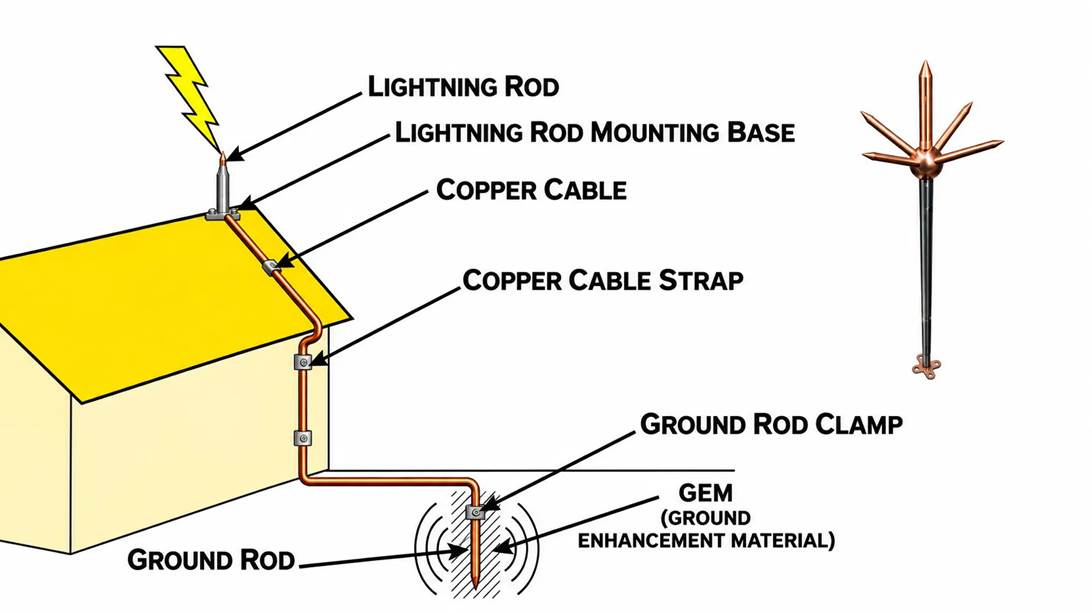
How does a lightning arrester stop lightning?
Reveal answerA lightning arrester does not stop lightning. Instead, it provides a low-resistance path that safely directs the high-voltage surge current to ground. This helps protect electrical equipment and power systems from damage caused by lightning strikes or voltage surges.
-
Question 11
State a few industrial uses of static charge.
Reveal answerIndustrial uses of static charge include electrostatic paint spraying, sandpaper manufacturing, smokestack precipitators, and the xerographic printing process used in photocopiers and laser printers. In these applications, static electricity helps attract particles, improve coating uniformity, or remove dust and smoke from the air.
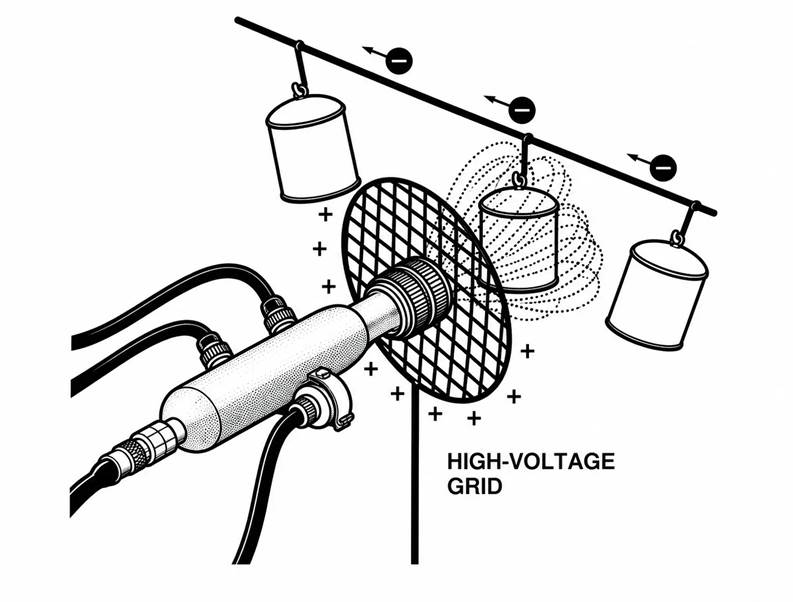
Electrostatic painting
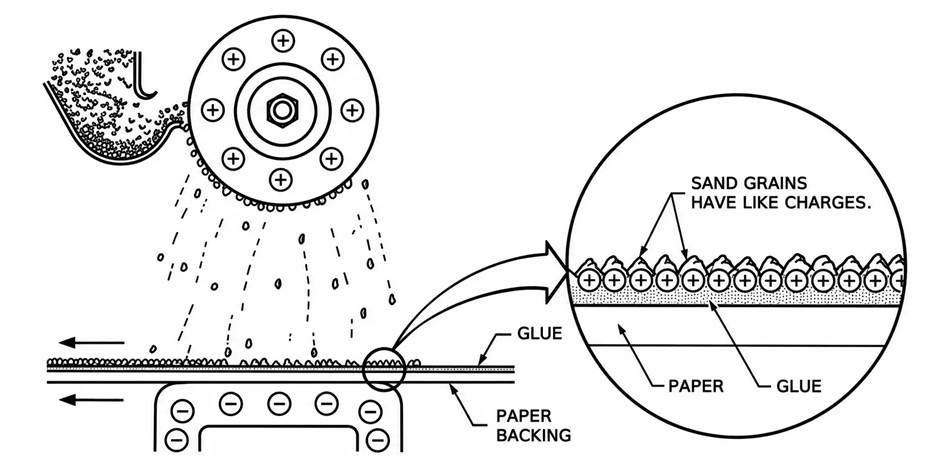
Sandpaper manufacture
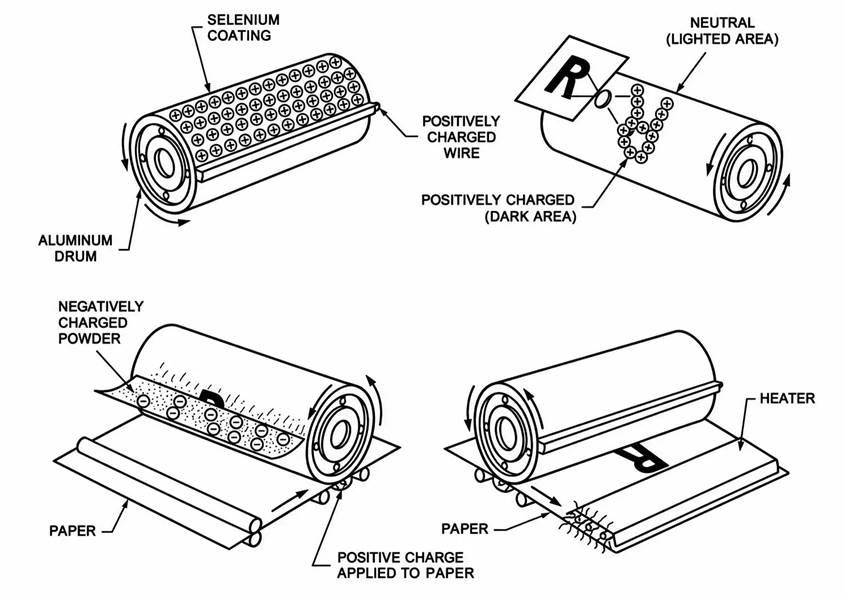
The xerographic process
-
Question 12
What industries try to avoid static charges?
Reveal answerIndustries that handle combustible dusts, flammable liquids, or explosive vapors are especially concerned with avoiding static charges. A buildup of static electricity can produce sparks that may ignite the surrounding material, creating fire or explosion hazards. Examples include chemical plants, grain elevators, fuel storage facilities, and powder-processing industries.
