Introduction
This chapter covers the principles of operation, equivalent circuits, losses, and applications of the various types of transformers.
Transformers, as the name implies, transform or change, from one level to another, the current and voltage that are applied to their input windings. An increase, or step-up, in the voltage across one winding is accompanied by an equal decrease, or step-down, of the current in the same winding.
Depending on the distance between the generating station and the user of electricity, the voltage—through a setup transformer—is increased, so the transmission line current is decreased and the line’s energy loss and voltage drop are decreased.
Almost all power distribution within factories, homes, and elsewhere is for economic reasons of sinusoidal voltages. (It simplifies the design and operation of motors and generators and the step-up or step-down of a given voltage).
- Single-phase transformers are covered in the greatest detail in this chapter because every other type of transformer is either a slightly modified single-phase transformer or a combination of single-phase transformers.
- Two-winding, three-phase transformers are also discussed because they are of primary importance to industry.
- Autotransformers and transformers in parallel operation have limited applications, but they are extensively analyzed because serious field problems may result from misunderstanding their operation.
- Instrument transformers are an essential part of any distribution network. They are briefly discussed here in order to point out some of the common problems that may arise during their installation and operation, and to emphasize the effects of magnetic saturation. The recently developed optical transformers are also described.
Analysis of transformers requires knowledge of per-unit values and of three-phase networks, which are common to all types of ac machines. Both of these topics are briefly discussed in this chapter.
The end of this chapter includes some practical highlights of transformer applications, such as nameplate data (technical data inscribed on a metal plate fastened on an easily seen part of the transformer) and typical manufacturers’ test results.
The photos of Figure 2-1 show a large outdoor substation transformer and other transformers with small power ratings.
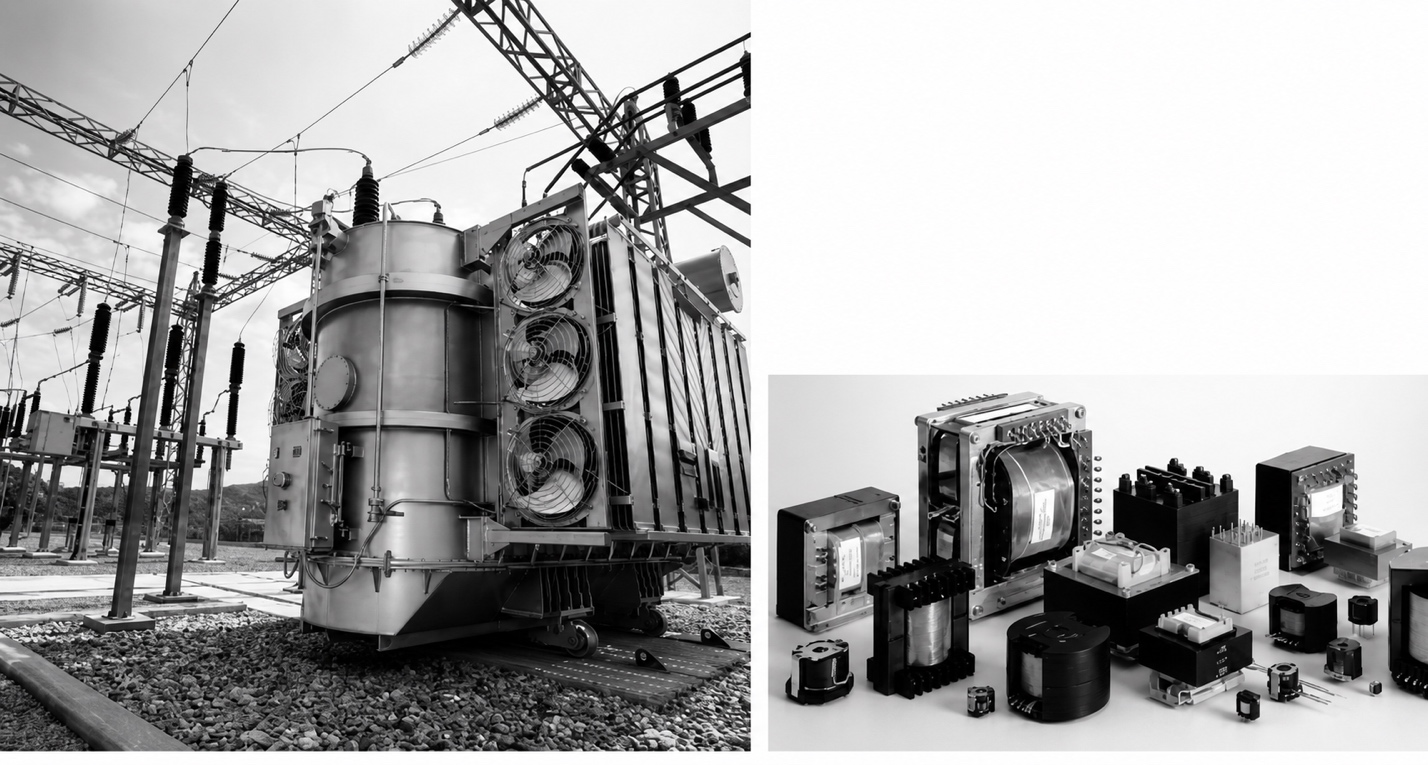
Figure 2-1. Various Types of Transformers
Figure 2-2 is a photo of one of the 1st transformers built in North America.
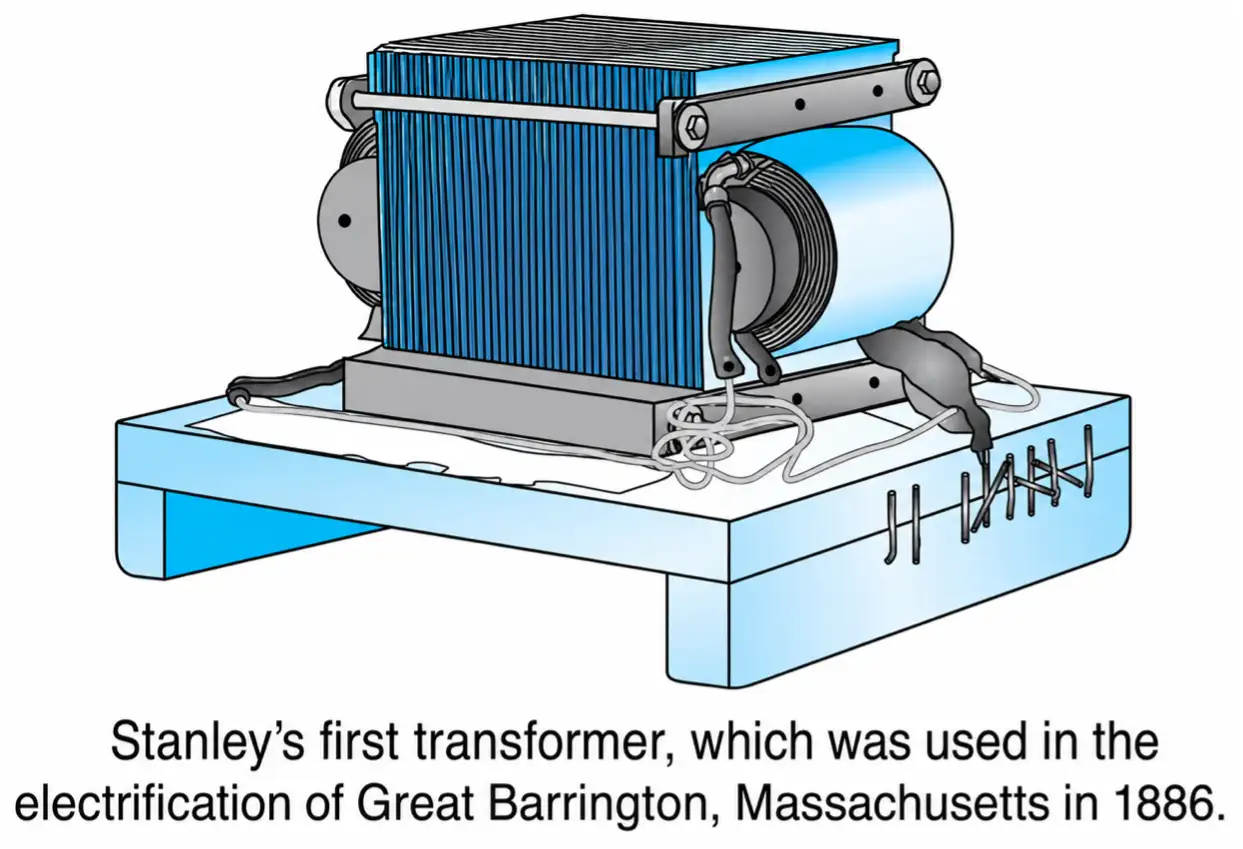
Figure 2-2. Transformer of 1886
The property of induction was discovered in the 1830s, but it wasn’t until 1886 that William Stanley, working for Westinghouse, built the first refined, commercially used transformer. His work was built on some rudimentary designs by the Ganz Company in Hungary (ZBD Transformer 1878), and Lucien Gaulard and John Dixon Gibbs in England.
