Permeability in Magnetism
Permeability is a measure of how easily a material can be magnetized. The higher the permeability of a material, the easier it is to magnetize.
Magnetizing a material means aligning all microscopic magnetic forces or moments within the material in the direction of the externally applied field. The alignment of the tiny and random inner magnetic moments toward a particular direction results in the magnetization of the material or the development of a stronger external magnetic field.
In other words, permeability is a measure of how easily the magnetic domains within a material can be aligned in the direction of the magnetizing force. Permeability may also be thought of as indicating how much flux density will be produced within a material by the application of a given magnetomotive force. The higher the permeability of a material, the greater the amount of flux density produced in a given value of field intensity.
Permeability is an intrinsic property of all materials and is designated by the Greek letter $(\mu)$ (mu). The unit of permeability in the SI system of units is the henry/meter (H/m).
The actual permeability $(\mu)$ of a magnetic material is given by the following equation:
$$\mu=\mu_0\mu_r \qquad (1.122)$$
Where $\mu_r$ is the relative permeability of the material and $\mu_o$ is the permeability of free space.
$$\mu_0=4\pi\times10^{-7}\,\text{H/m} \qquad (1.123)$$
As shown in Table 1-2(a), the relative permeability of magnetic materials varies over a wide range.
|
|
Material |
|||
|
Relative Permeability |
Air |
Powdered Iron |
Typical Transformer Iron |
Permalloy |
|
1 |
100 |
3000 |
100,000 |
|
The incremental permeability of magnetic materials is given by the slope of density versus intensity characteristic curve. That is,
$$\text{Permeability}=\frac{\text{Change in magnetic flux density}}{\text{Corresponding change in magnetic field intensity}}$$
or
$$\mu=\frac{dB}{dH} \qquad (1.124)$$
Permeability is not a constant parameter but depends on the flux density or on the applied mmf that is used to energize the magnetic circuit, as shown in Figure 1-61. Thus, when speaking of the relative permeability of a material, one has to specify the flux level at which it corresponds to.
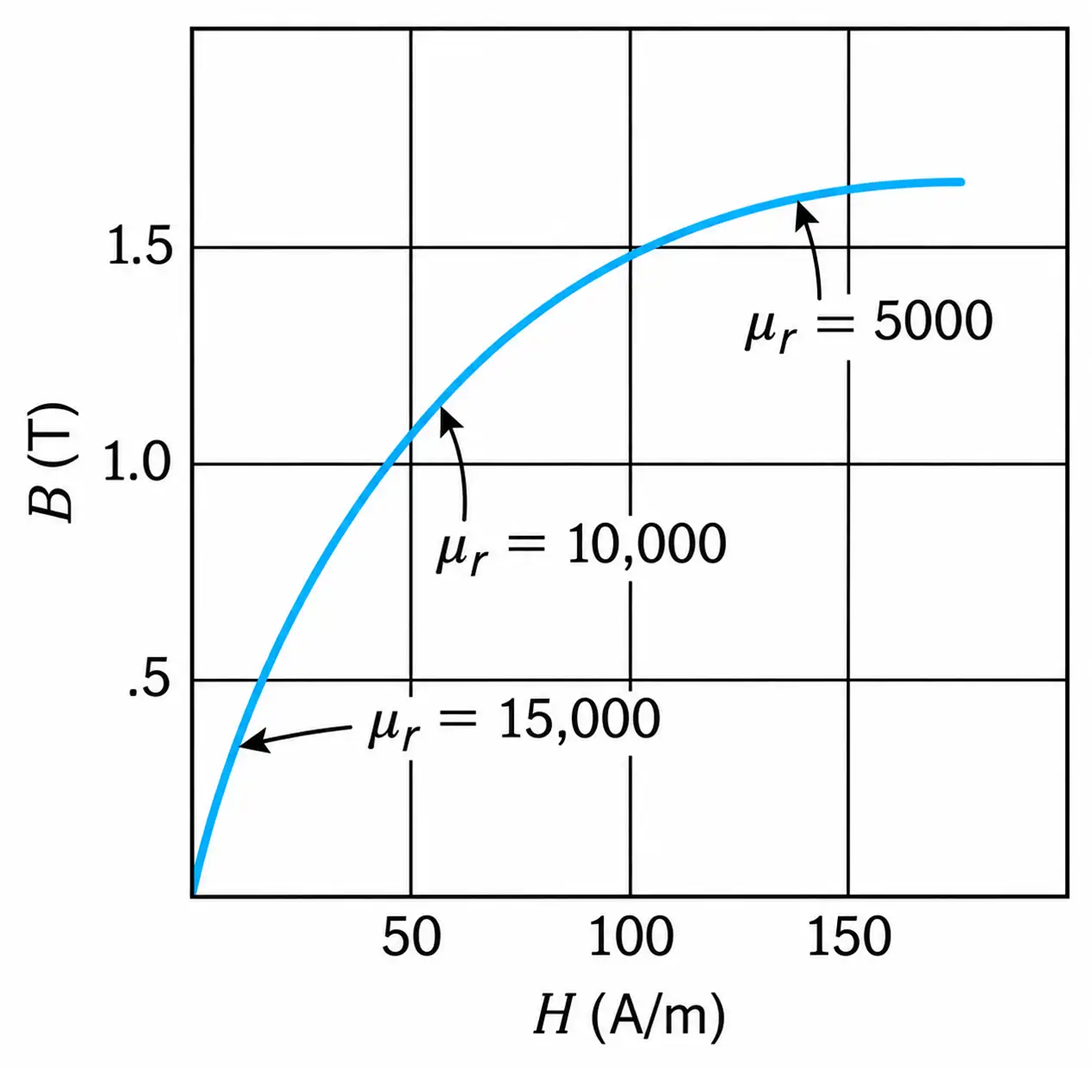
Figure 1-61 Typical B-H characteristic curve
The permeability of a material can also be expressed as a function of a coil’s inductance. From the induction principle, we have
$$\upsilon=-N\frac{d\Phi}{dt}=L\frac{di}{dt} \qquad (1.125)$$
From the above, we obtain
$$N\Phi=Li \qquad (1.126)$$
where L and i are, respectively, the self-inductance and the instantaneous value of the coil’s current. Solving for the flux, we get
$$\Phi=\frac{Li}{N} \qquad (1.127)$$
For operation along the linear section of the B-H curve,
$$\mu=\frac{B}{H} \qquad (1.128)$$
From the above, we obtain
$$\mu=\frac{Li}{NA}\left(\frac{l}{Ni}\right) \qquad (1.129)$$
Or
$$\mu=\left(\frac{l}{N^2A}\right)L \qquad (1.130)$$
Or
$$\mu=KL \qquad (1.131)$$
The constant of proportionality (K) can be calculated from the number of winding turns and the geometry of the magnetic core under consideration. By knowing the constant of proportionality and measuring the inductance of a given coil, the permeability of the magnetic material can be easily established.
Example 1-20
A coil of 50 turns is wound around the toroid shown in Figure 1-62. When a certain voltage is applied across the coil, its inductance is found to be $200\,\mu H$. Determine the relative permeability of the magnetic material from which the toroid is made.
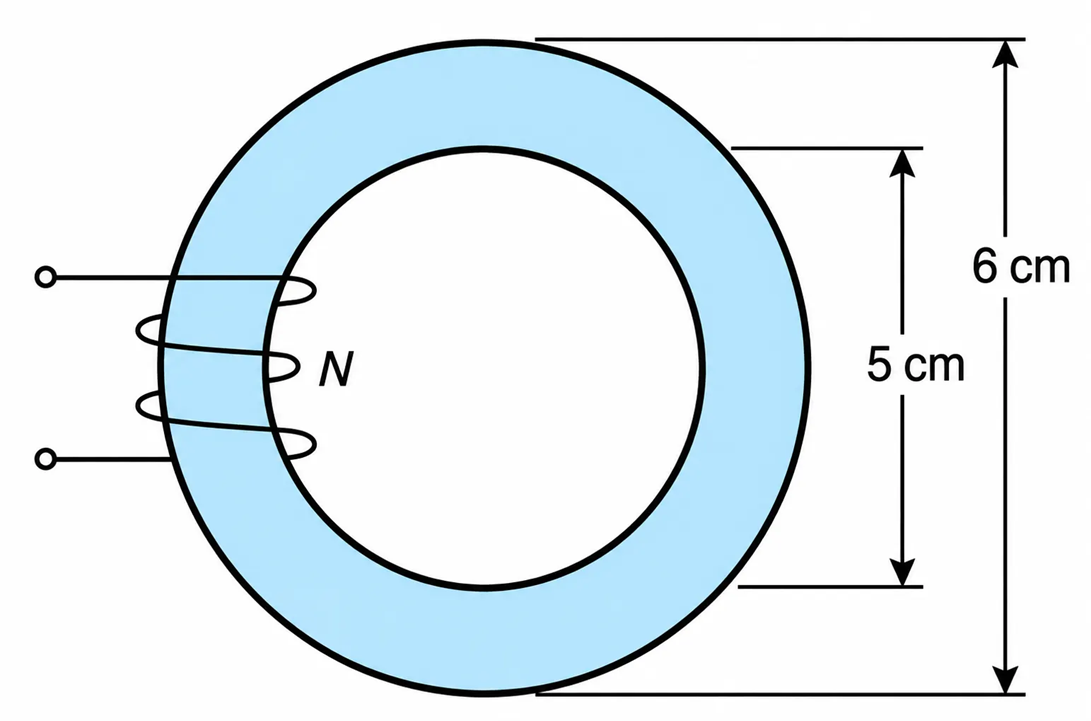
Figure 1-62 Coil wound around the toroid
Solution
The cross-sectional area perpendicular to the flux is
$$A=\frac{\pi}{4}(0.5\times10^{-2})^2=0.196\times10^{-4}\,\text{m}^2$$
The mean magnetic path is
$$l=2\pi r_m=2\pi(0.0275)=0.17\,\text{m}$$
From Equation (1.130), the permeability is
$$\mu=\frac{Ll}{N^2A}=\frac{(200\times10^{-6})(0.17)}{(50)^2(0.196\times10^{-4})}=0.70\times10^{-3}\,\text{mH/m}$$
Thus. the relative permeability is
$$\mu_r=\frac{\mu}{\mu_0}=\frac{0.70\times10^{-3}}{4\pi\times10^{-7}}=\underline{\underline{560.23}}$$
Remarks
The example would be more illuminating if the test voltage were specified. After all, the value of the permeability is meaningful if and only if the corresponding magnetization level is known.
